

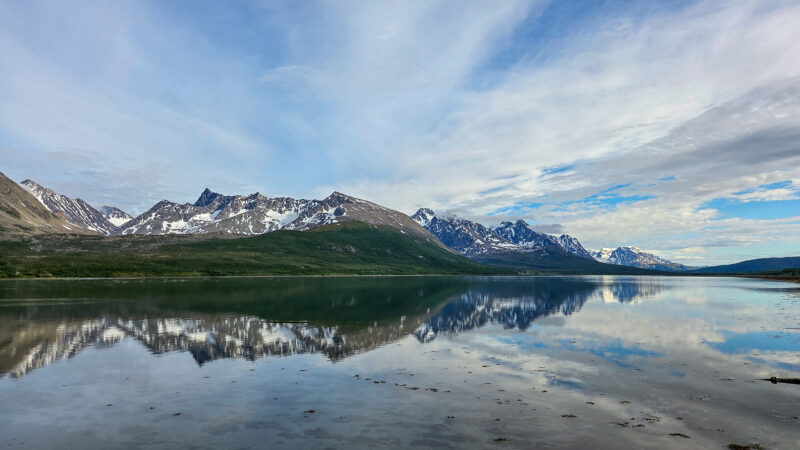
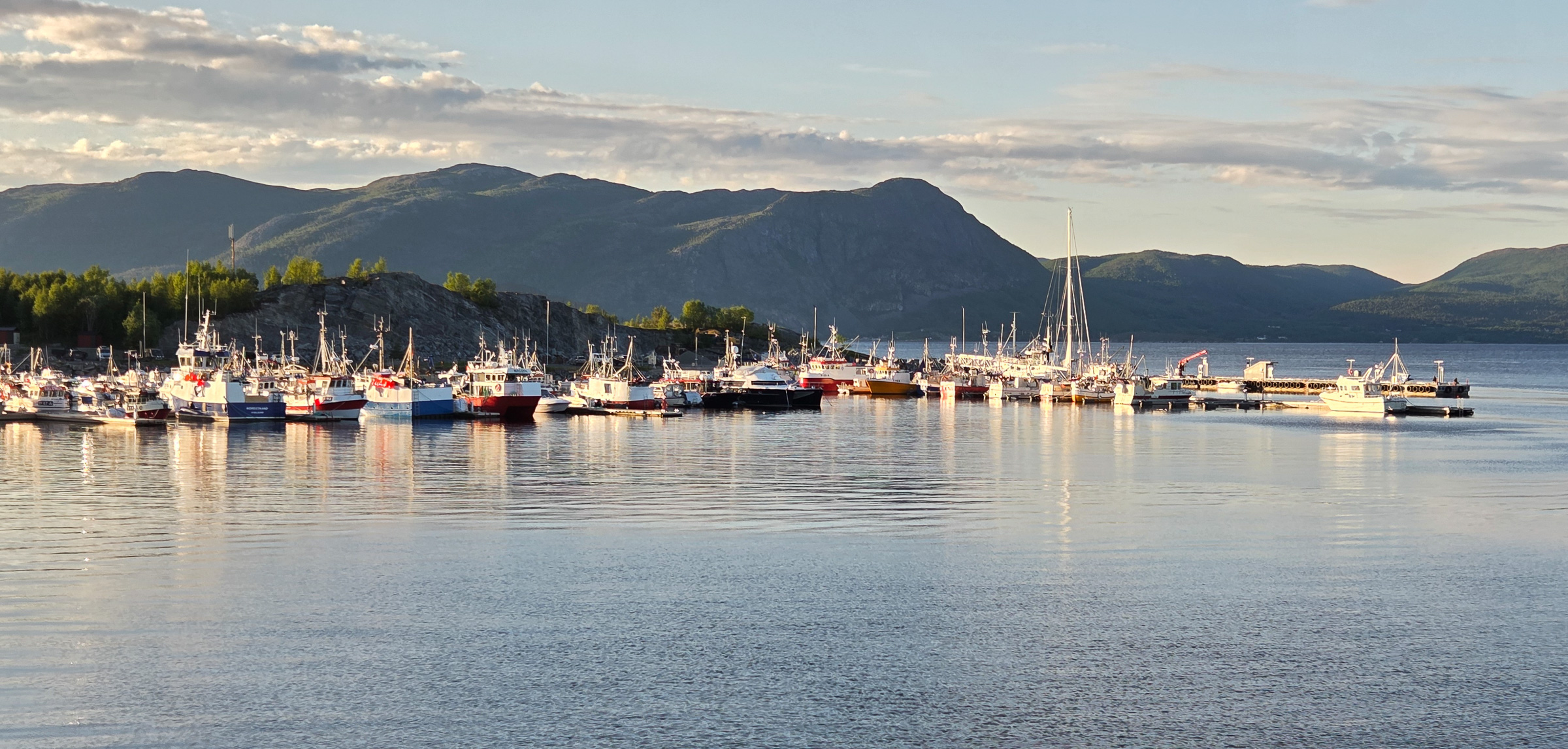
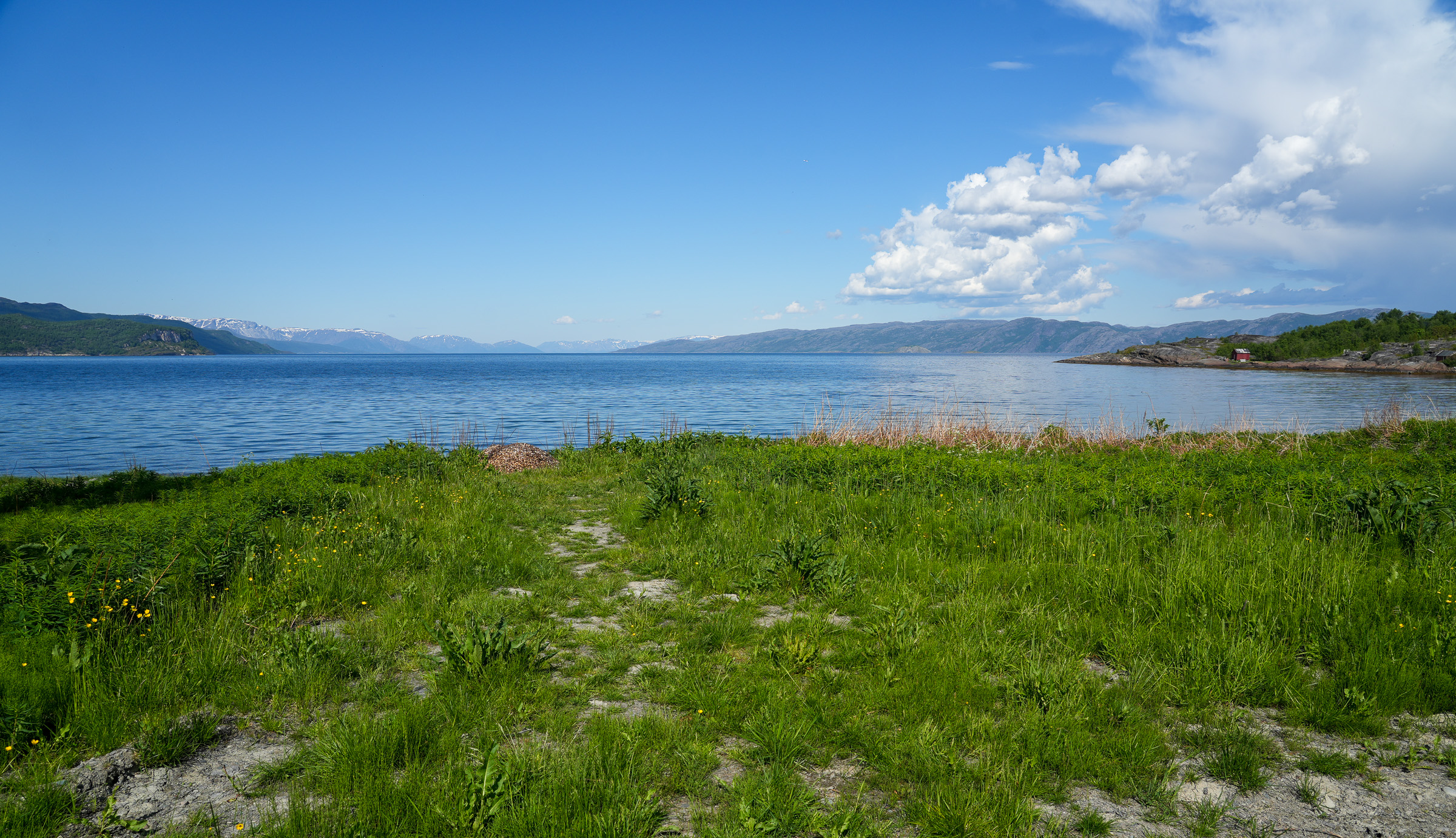
Heading towards Alta via Akkarfjord, we travel deeper into Finnmark. We want to learn more about Sámi culture and gain a better understanding of their way of life. In Urnesbukta, just outside Alta, we find a berth among a fleet of fishing boats.
The morning is unusually warm, with bright sunshine and not a cloud in the sky. Unfortunately, our first task is to repair the grey water pump. While Klaus is busy working on it, Anori gets a thorough clean and a load of washing is done. We then unload the bicycles, ready for a ride into town. The next unwelcome surprise soon follows: one of the bikes has a puncture. We struggle to remove the tyre, but despite our efforts we cannot find the leak in the inner tube. Birgit rides into town on the other bike and buys a replacement tube. Once it has finally been fitted, we are at last ready to set off.
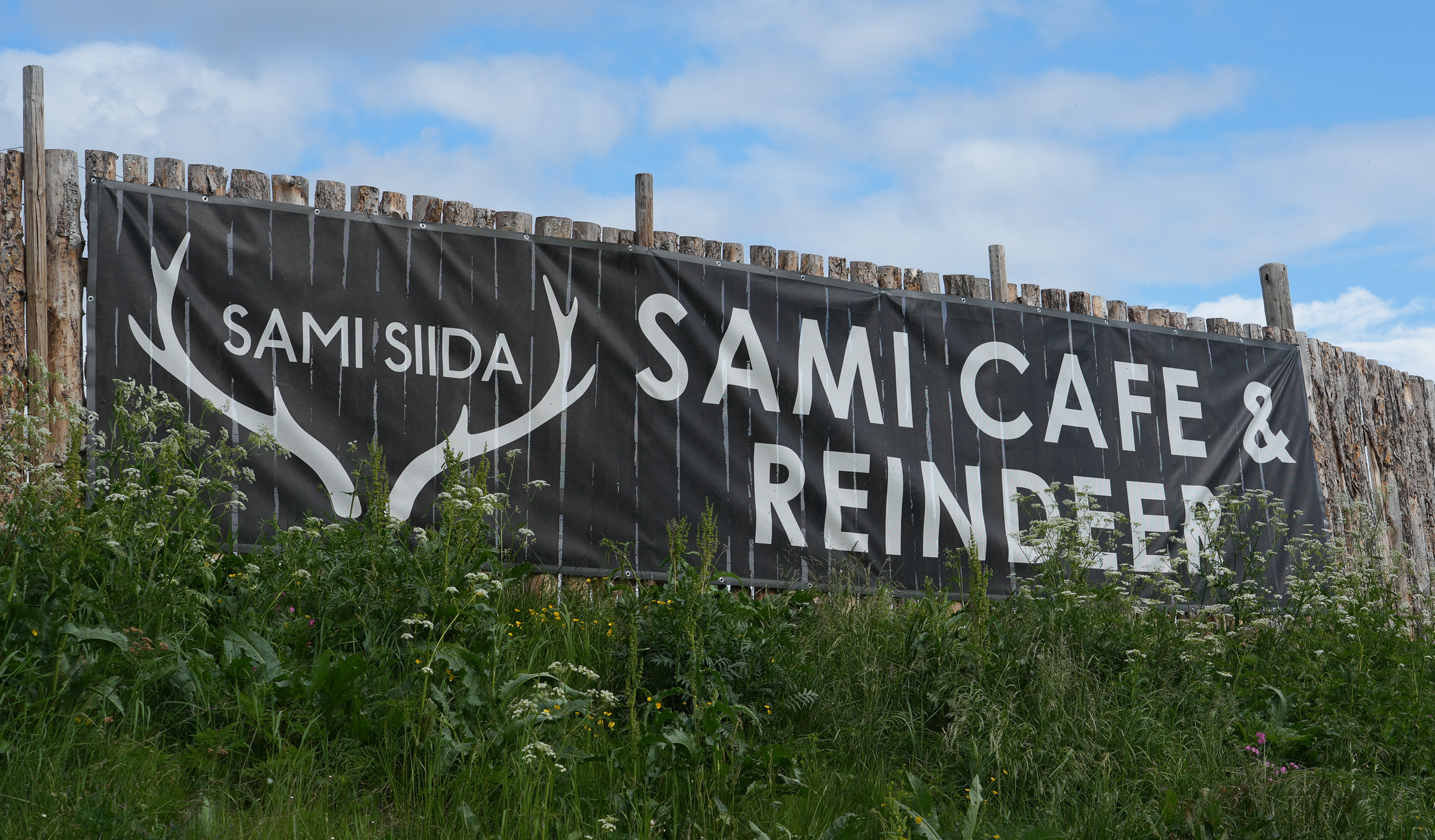
After a short ride around the compact town centre, we explore the local restaurant scene and come across a Sámi restaurant. We cycle the four kilometres to get there and enjoy a traditional dinner featuring reindeer dishes. The family who run the restaurant also offer a range of guided tours and cultural experiences, so we decide to join one of their reindeer-feeding tours.
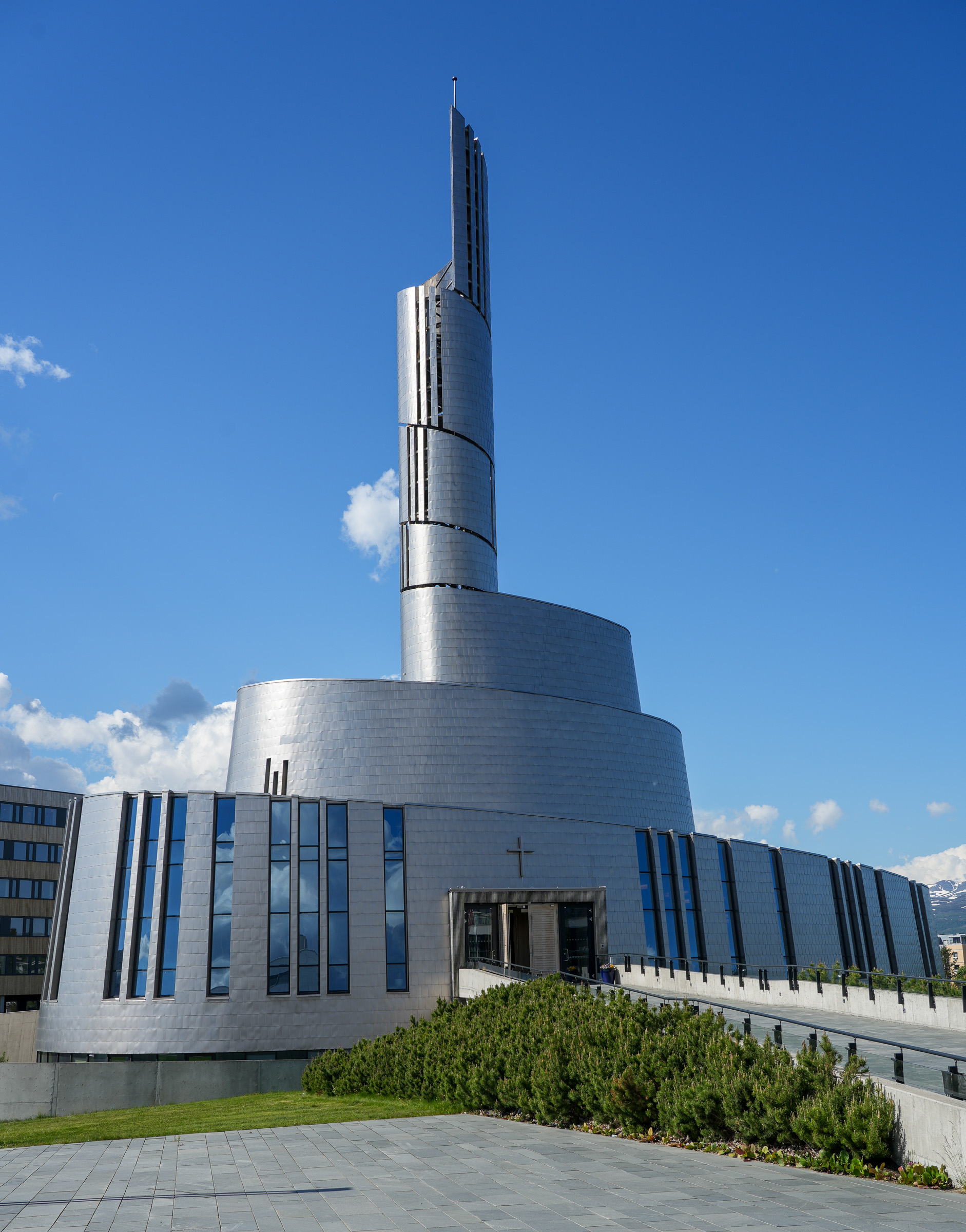
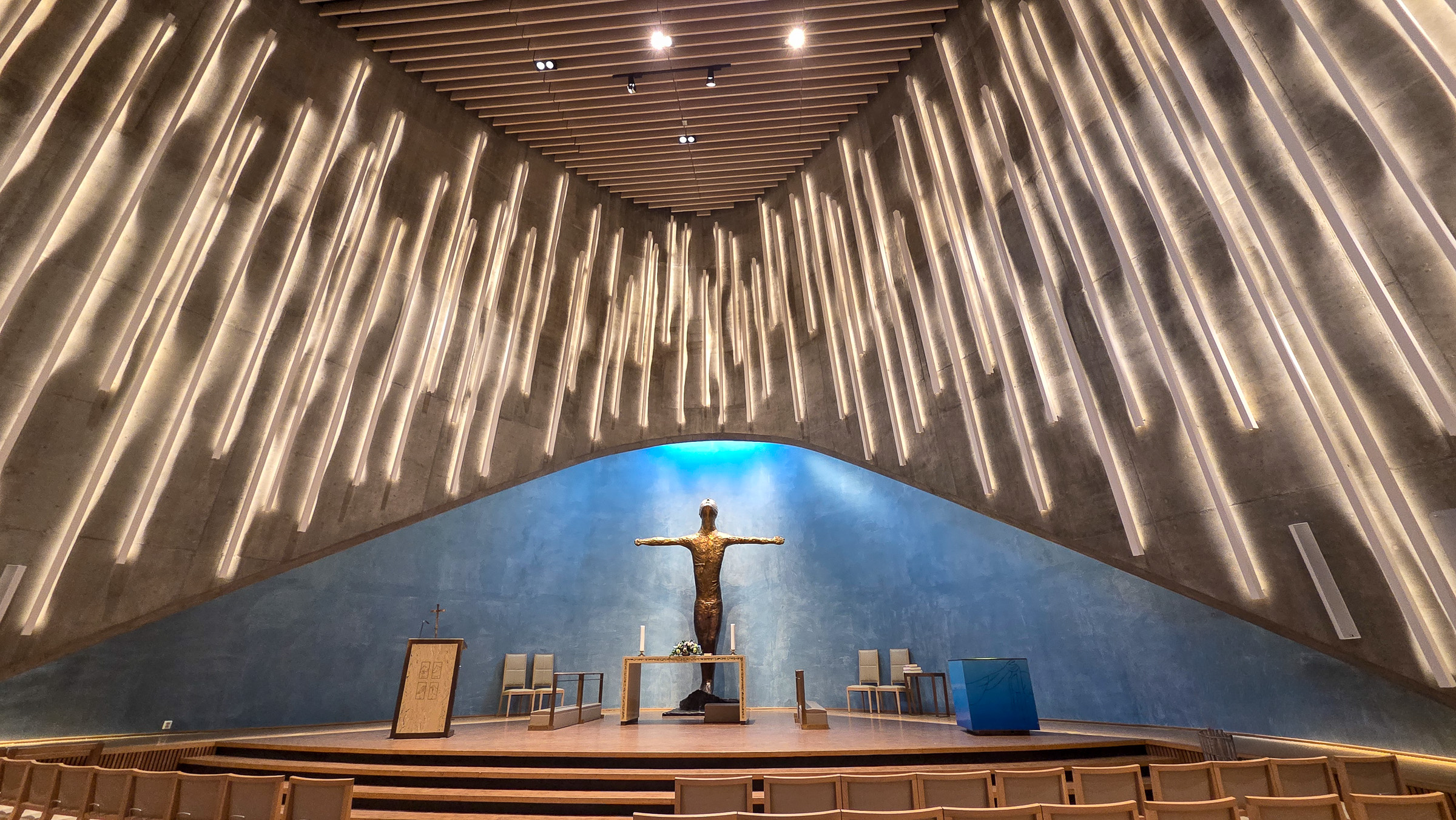
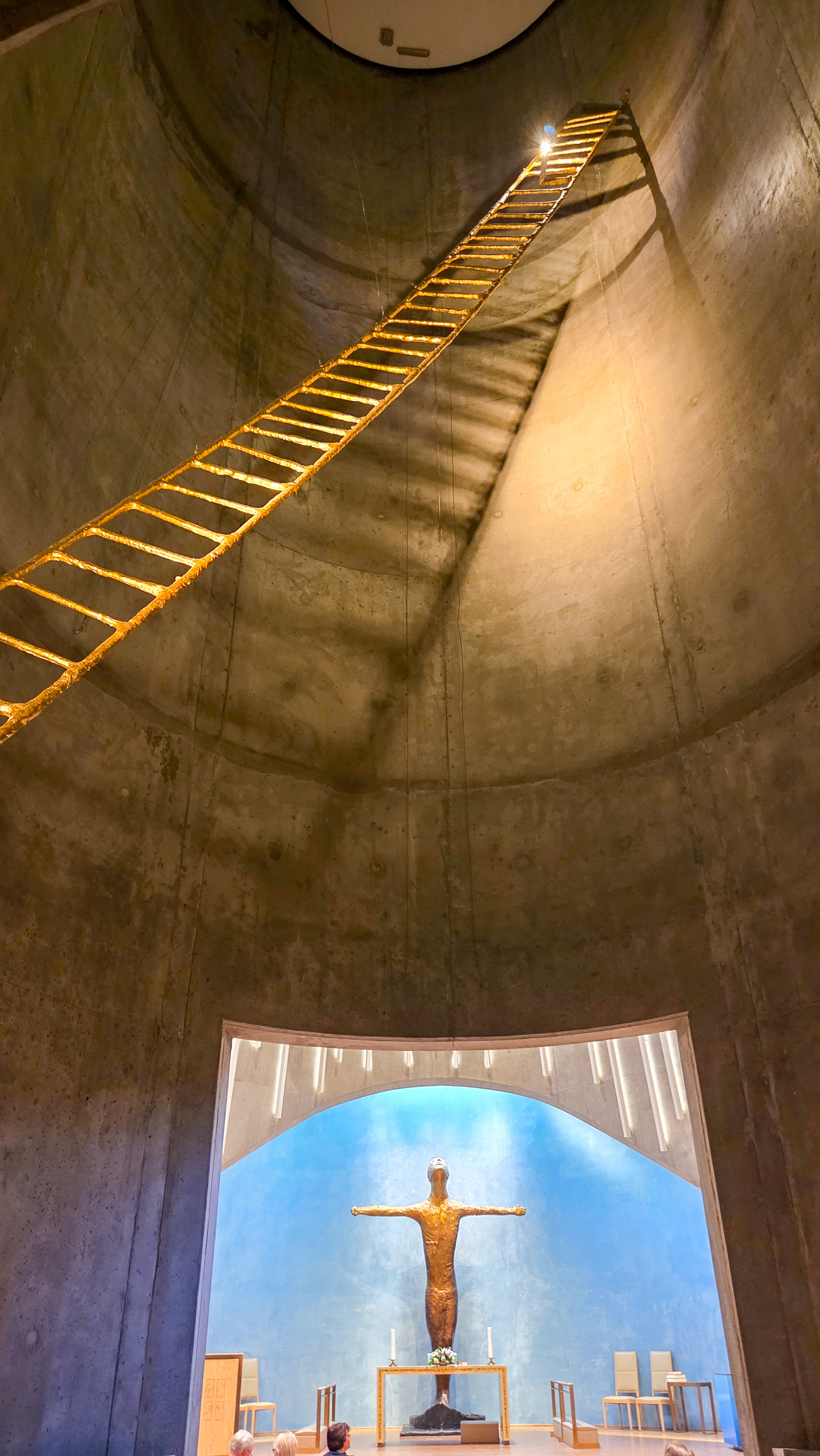
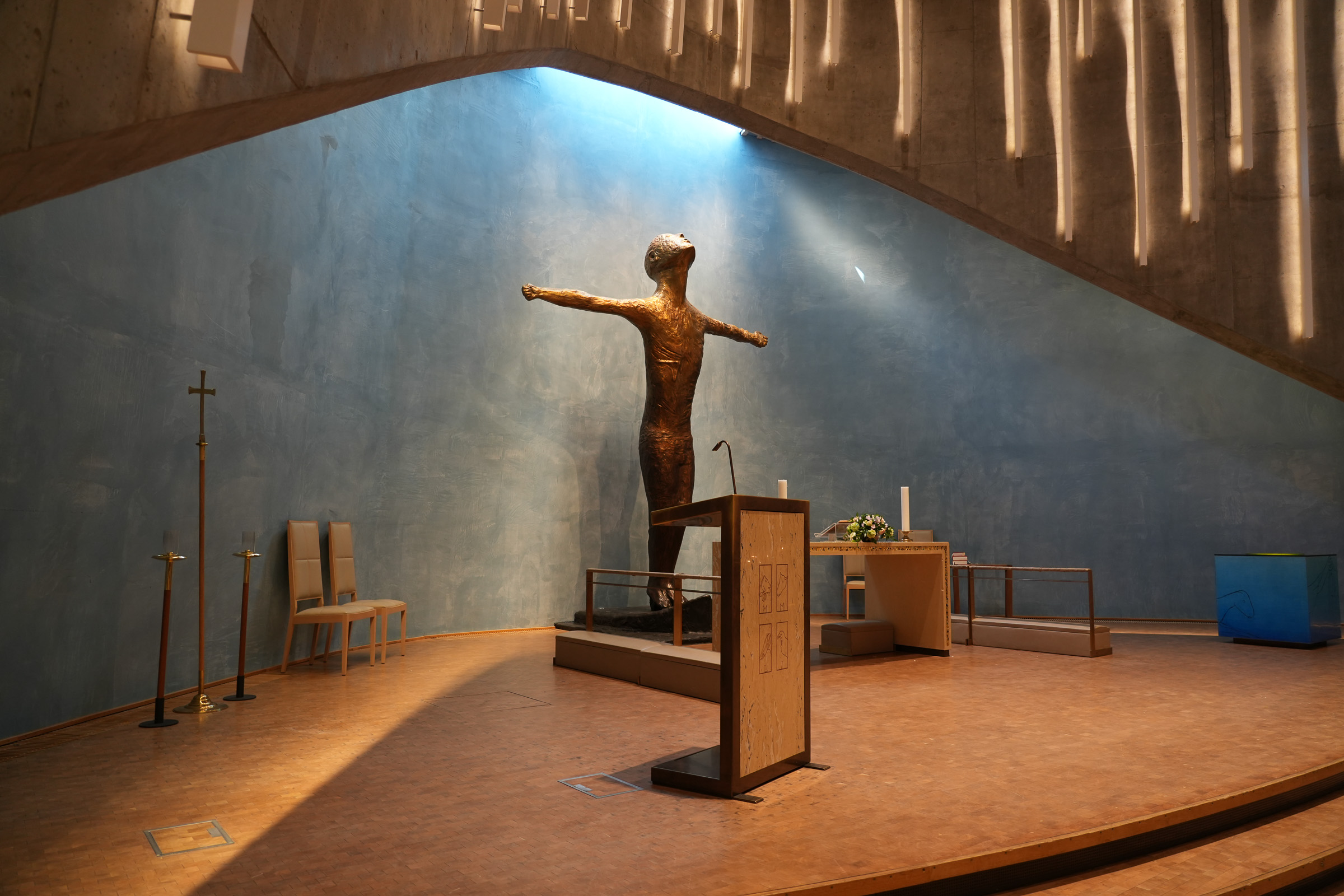
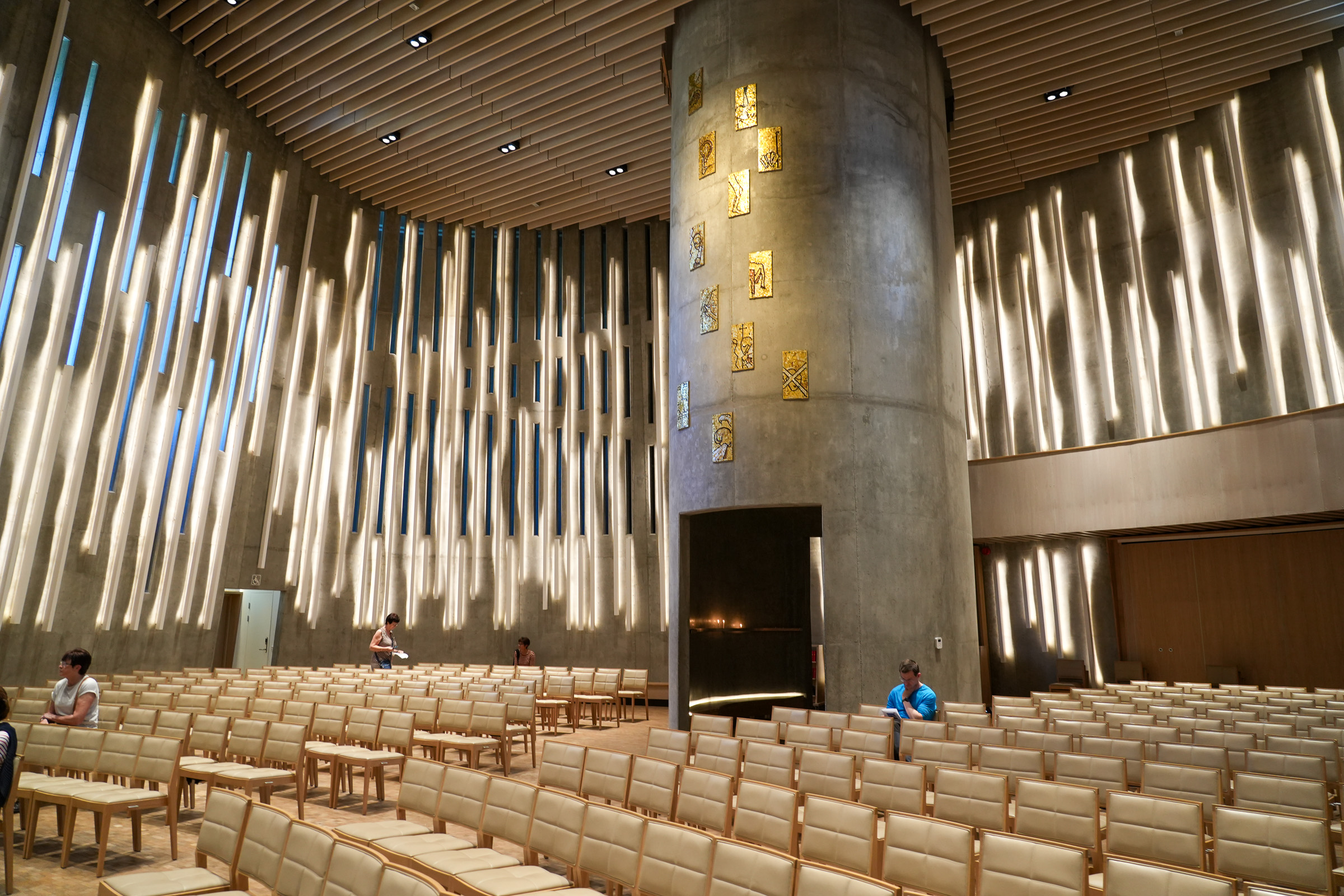
The following day, however, is reserved for a longer cycle ride. Our first stop is the Northern Lights Cathedral in Alta, an impressive piece of modern architecture with a wonderful atmosphere inside.
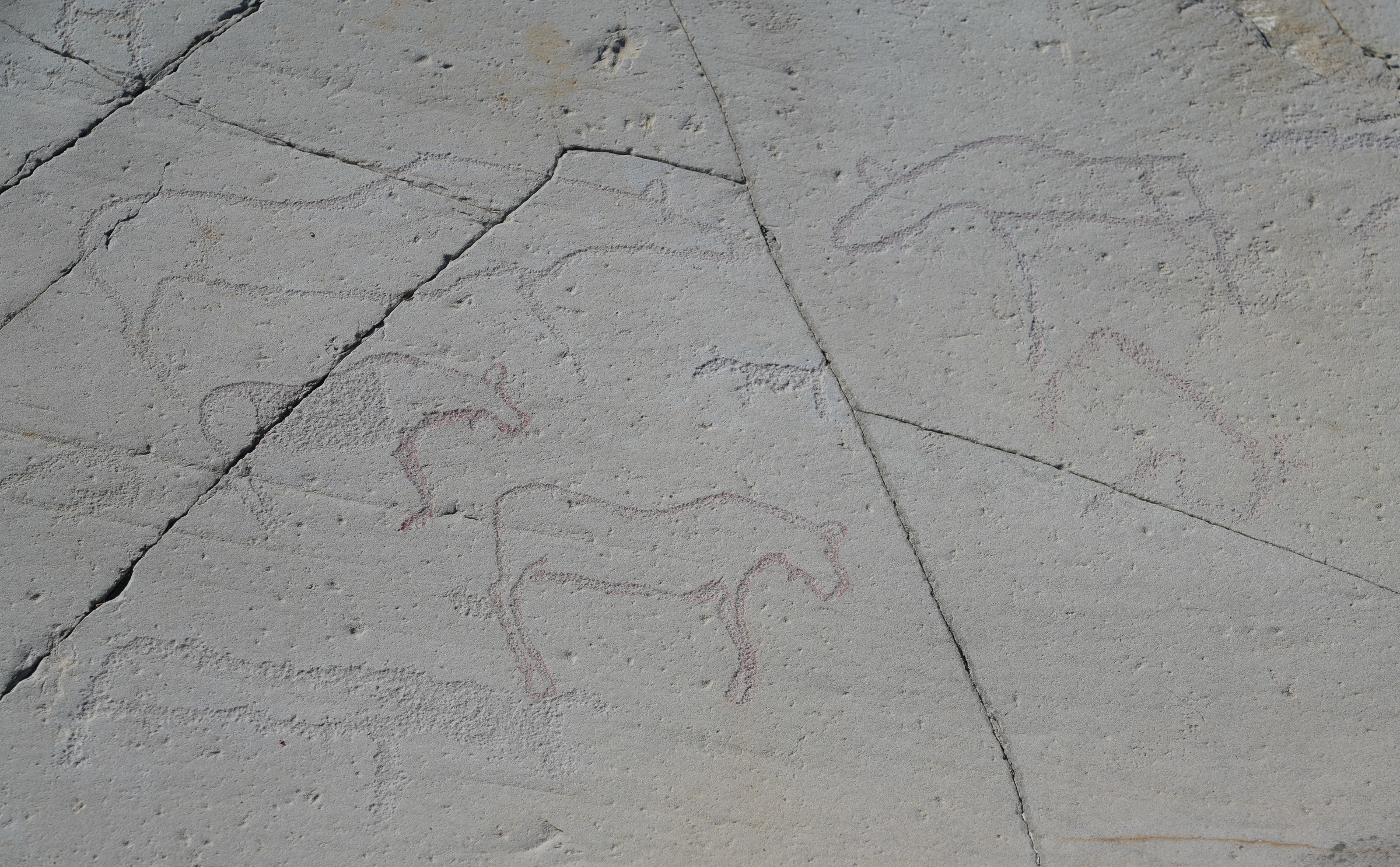
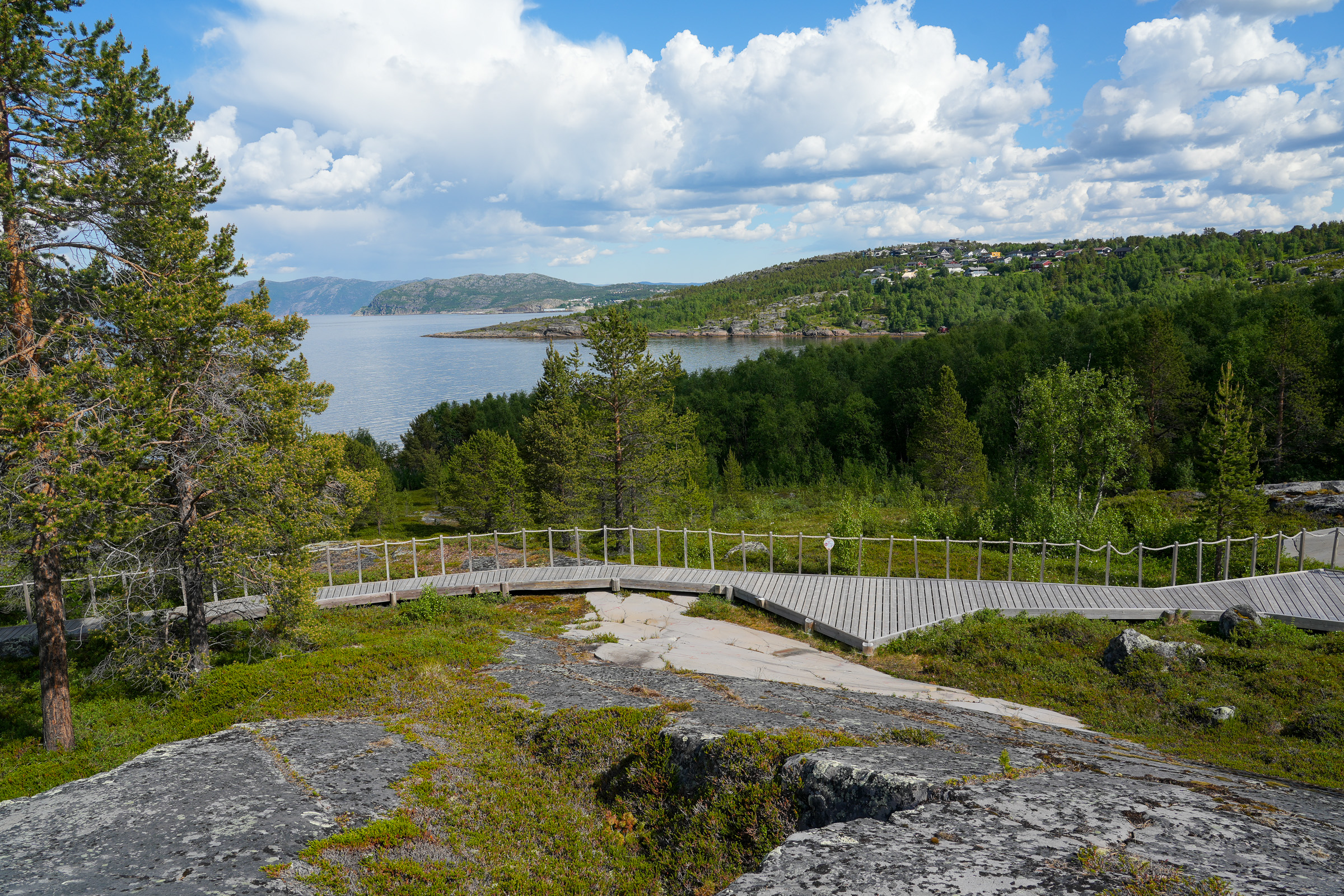
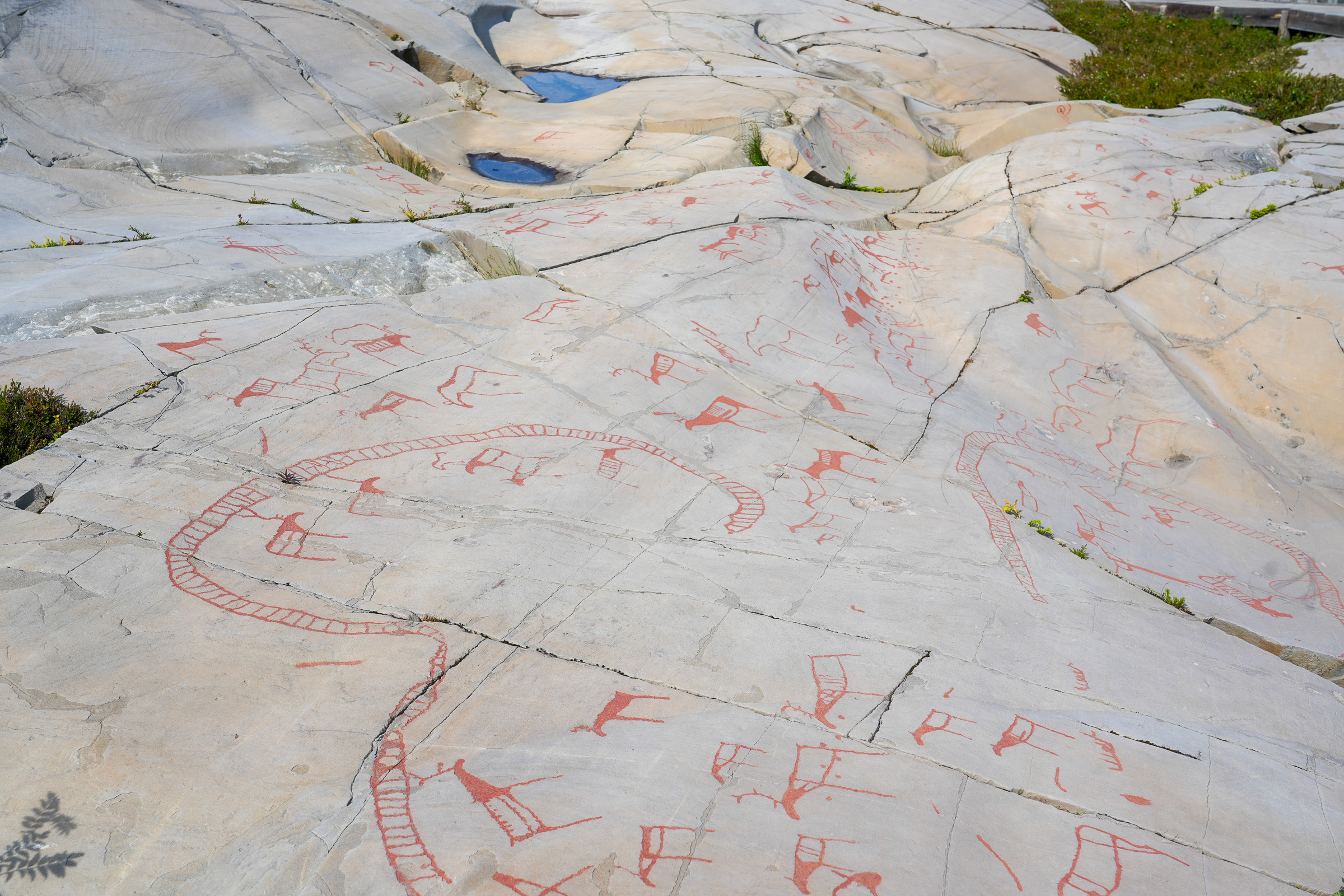
Our next stop is the Alta Museum. Besides its exhibitions, the highlight is undoubtedly the extensive collection of rock carvings, which form part of the UNESCO World Heritage Site. A network of wooden walkways provides access to the archaeological sites. In glorious weather, we take our time exploring the carvings, some of which have been highlighted with red paint to make them easier to see. Many of them are up to 7,000 years old.
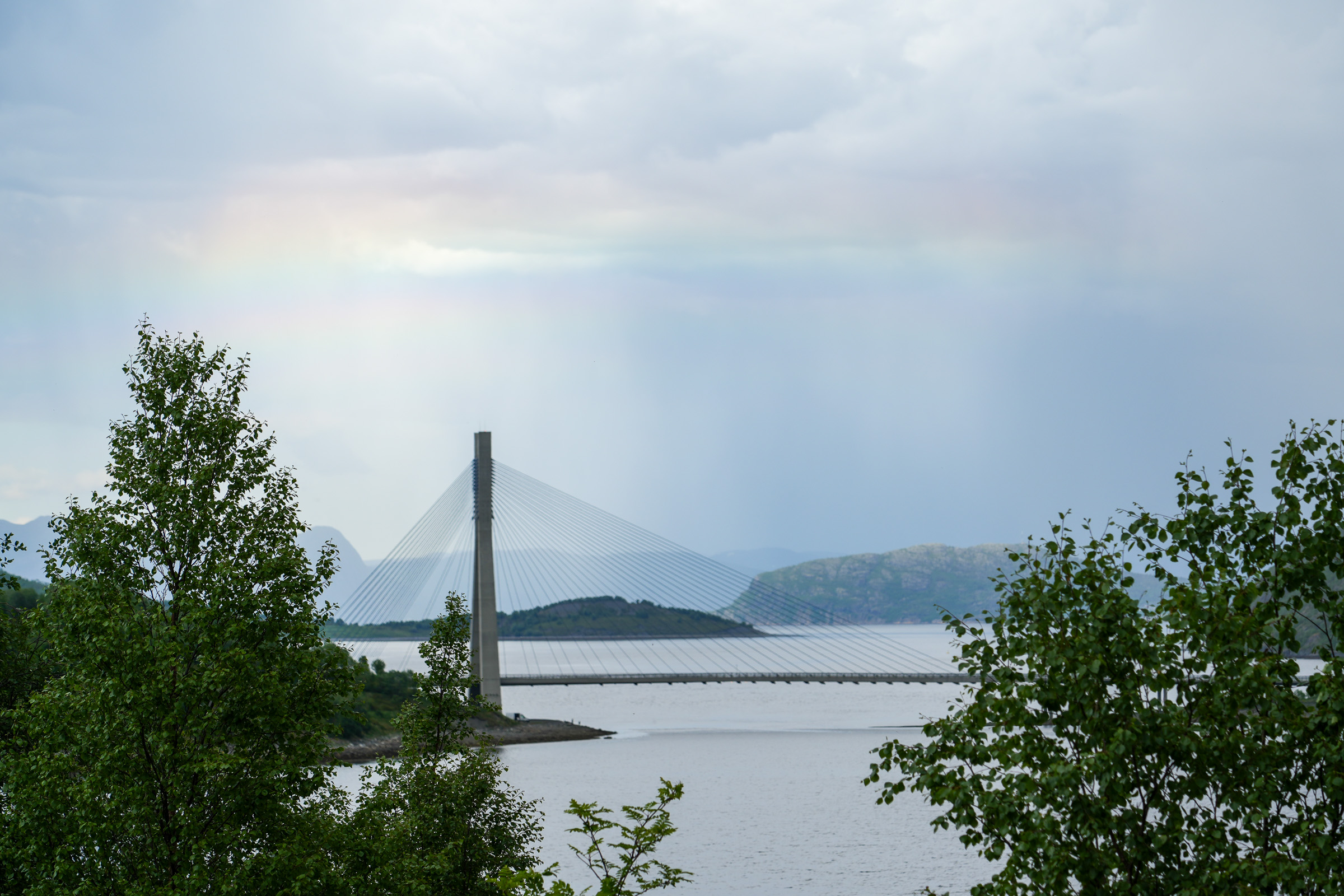
After a light lunch, we continue towards the Kåfjord Bridge. By now, dark rain clouds have gathered, and just before we reach the bridge the heavens open. We take shelter at the Tirpitz Museum, but set off again a little too soon. The downpour catches us in full force, and we end up completely soaked. Fortunately, the sun returns afterwards, so by the time we get back to Anori we are almost dry again.
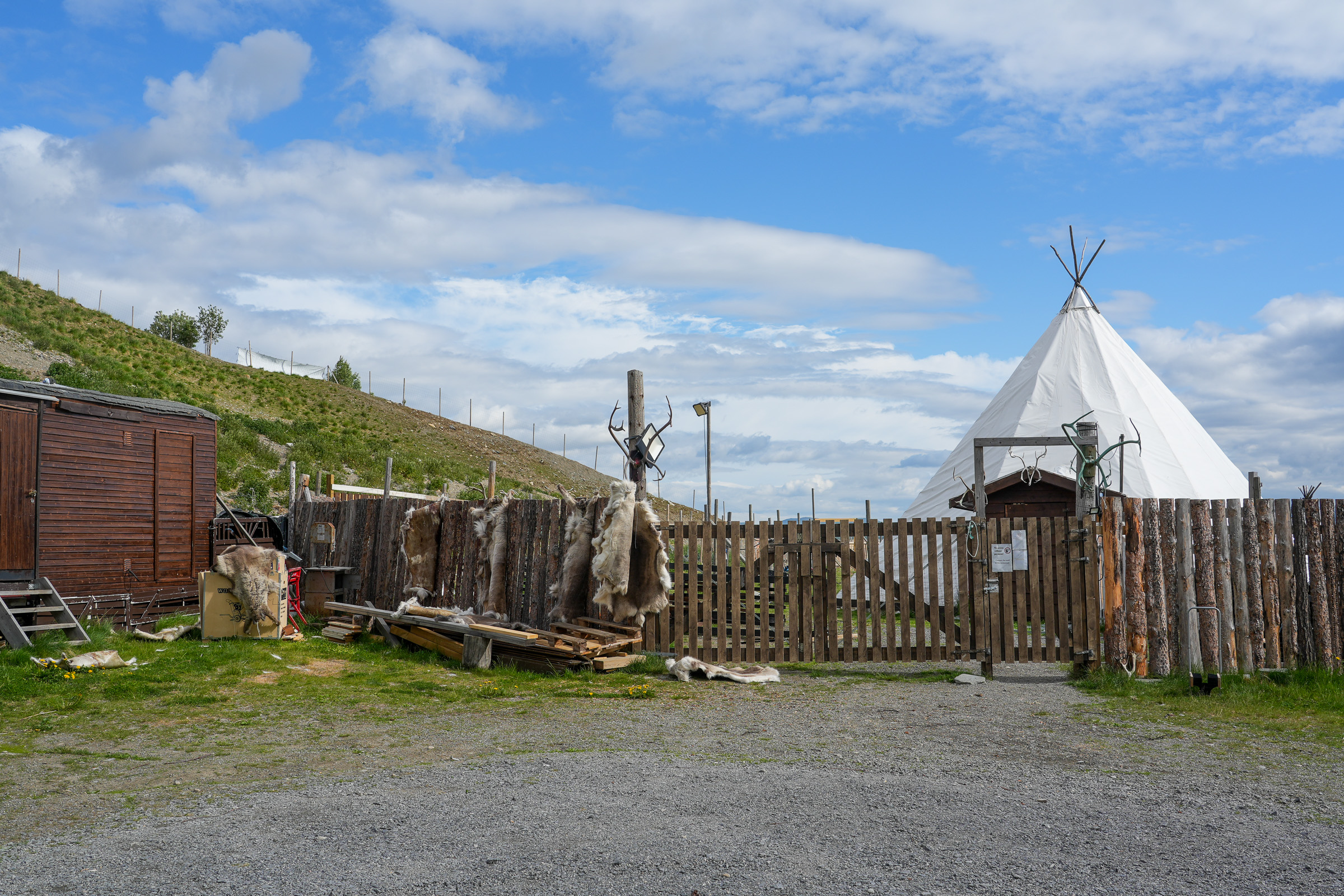
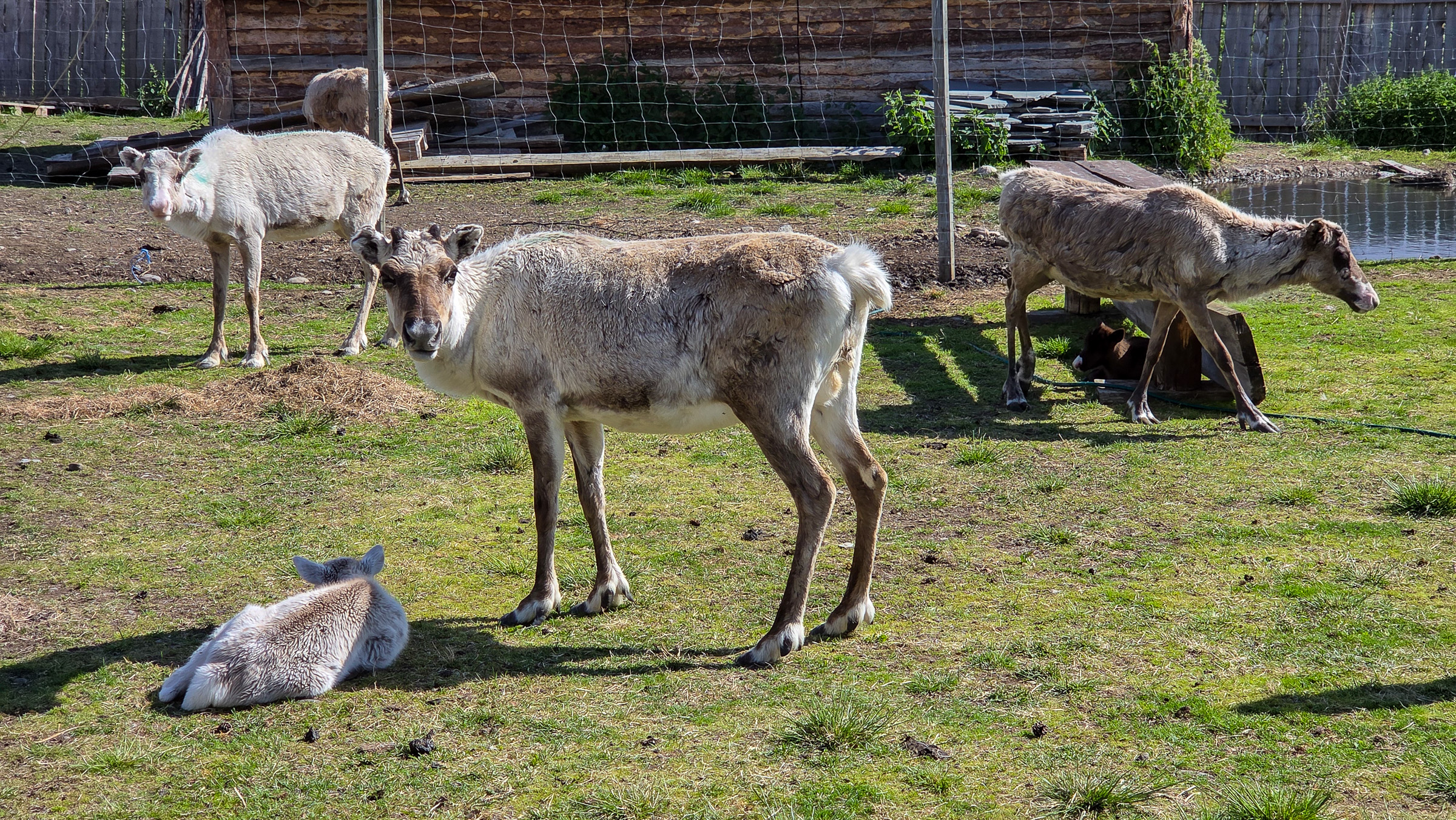
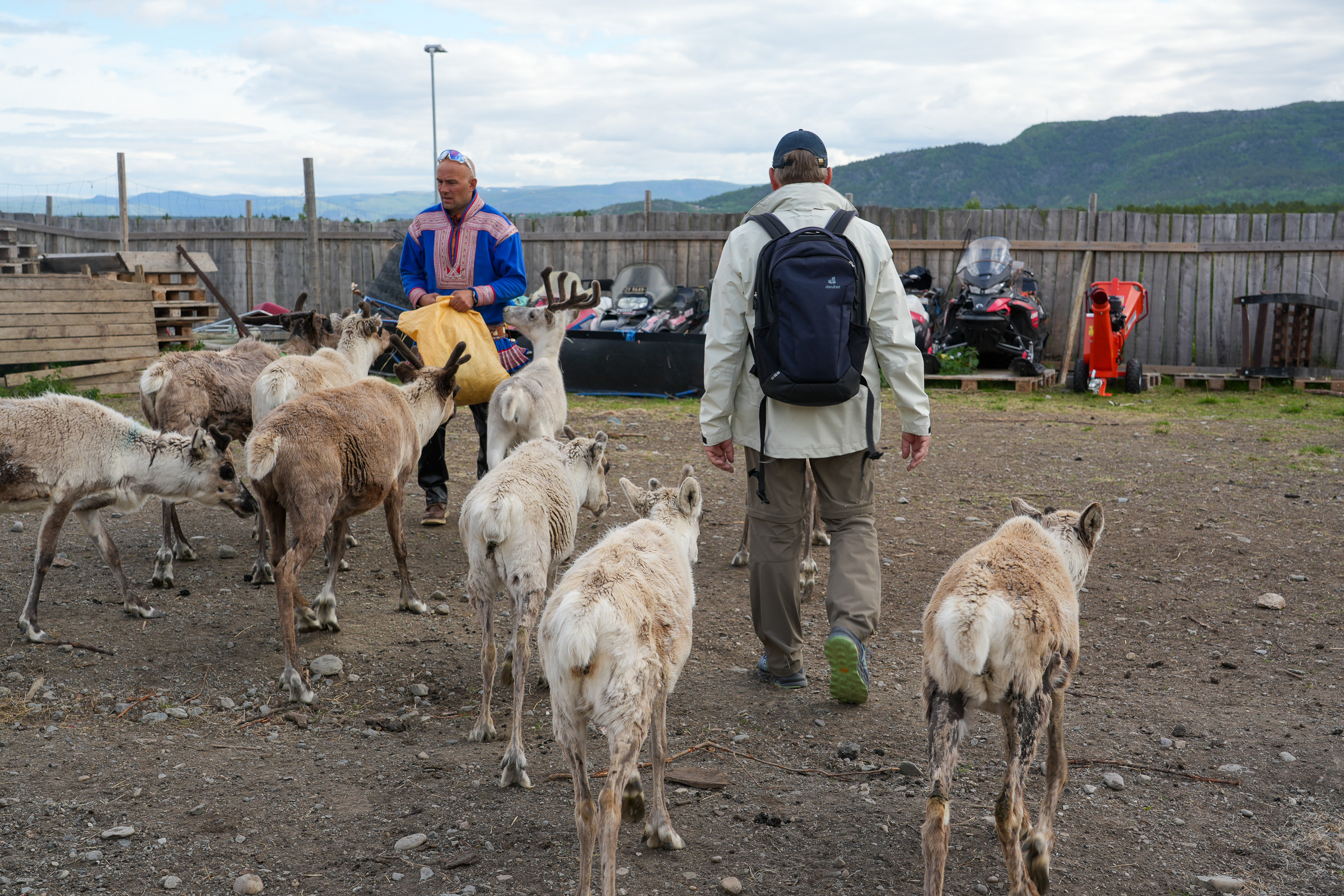
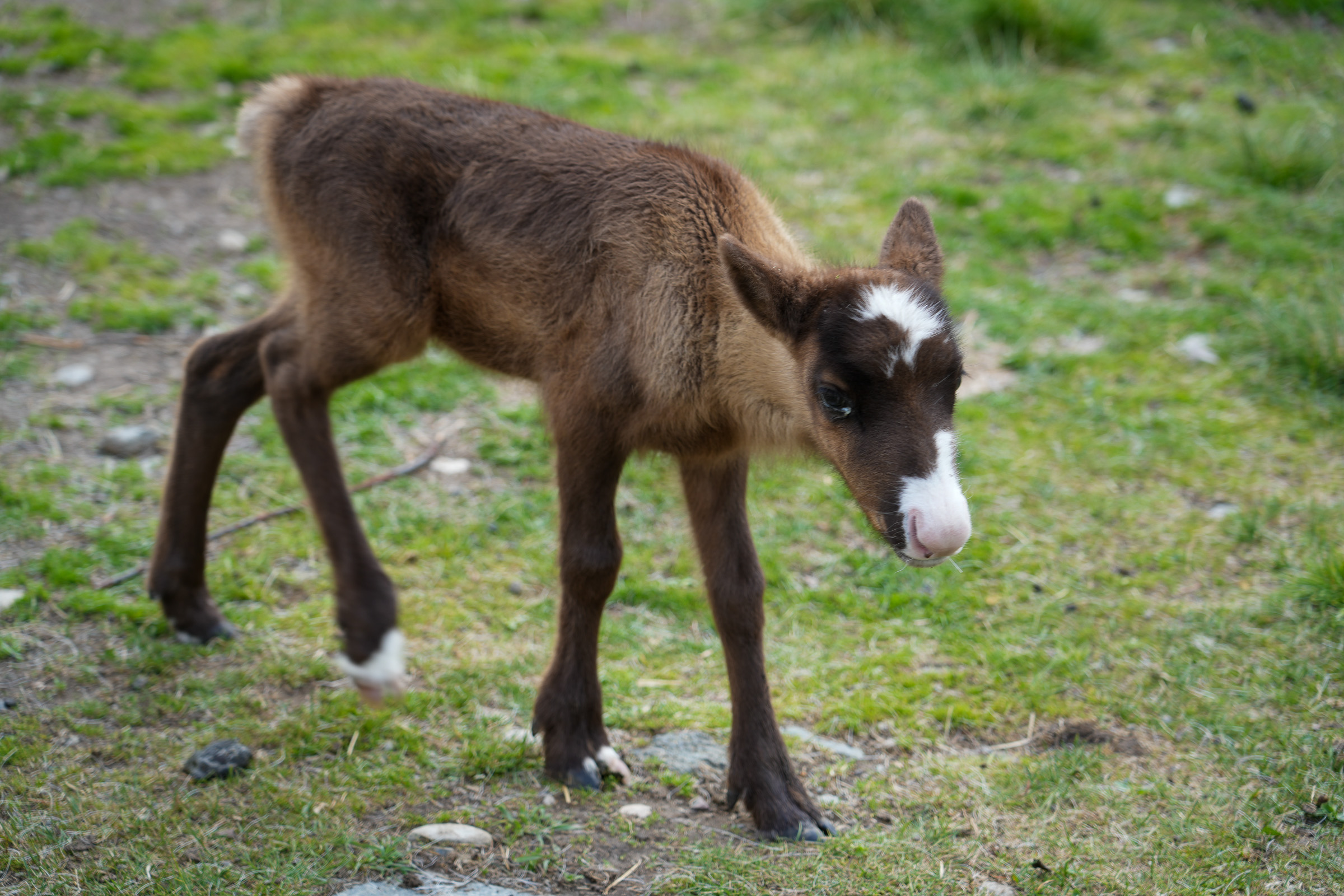
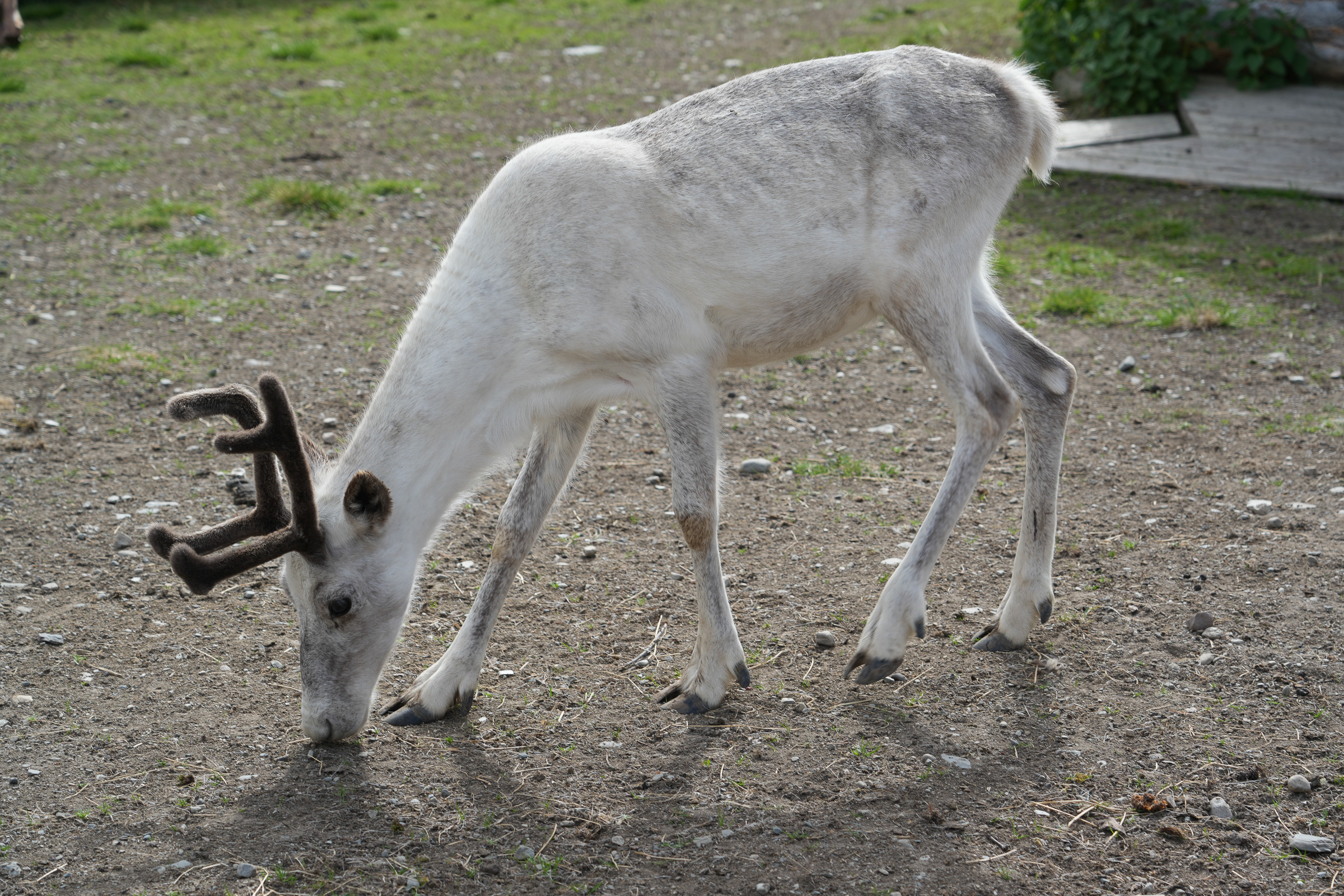
The following morning, we have booked a reindeer experience. Dressed in traditional Sámi clothing, our guide introduces us to the reindeer and explains the Sámi way of life. He takes plenty of time to answer our questions, giving us a fascinating insight into Sámi culture and traditions.
We find the explanations of traditional reindeer herding particularly interesting. Every reindeer belongs to a family and is identified by a unique pattern of notches cut into its ears. These markings allow the owners to recognise their animals even within very large herds.
Our guide also tells us about the seasonal migrations of the reindeer. In the past, the animals had to swim to the offshore islands each spring, where they spent the summer grazing. Today, they are transported by specially designed boats, making the journey much easier for both people and animals. Even so, the annual migrations still shape the rhythm of life for many Sámi families.
We also learn about traditional Sámi life. We visit a lavvu, the distinctive Sámi tent, which can be erected and dismantled quickly, making it perfectly suited to a lifestyle that followed the seasonal movements of the reindeer. We are particularly impressed by how every part of a reindeer was put to good use. The meat provided food, the hides were turned into warm clothing and blankets, while antlers and bones were crafted into tools and everyday household items. In the harsh environment of the far north, nothing could be wasted.
After almost two hours, we leave feeling that we have learned far more about Sámi culture than we had expected.
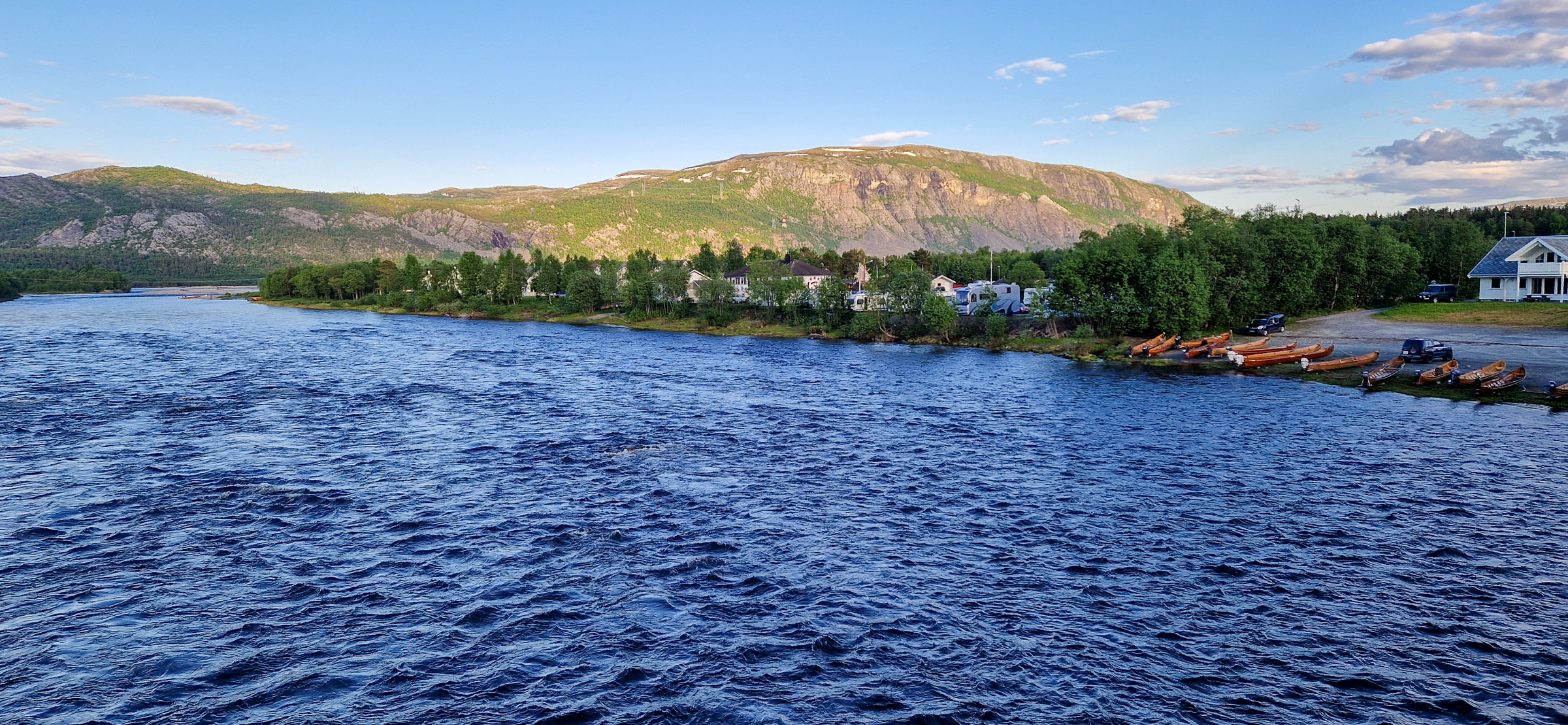
Around midday, we cast off. Before long, we are caught in another series of heavy rain showers, accompanied by shifting winds. Eventually, we lower the sails and motor the rest of the way to Øksfjord, as the weakening wind is now blowing directly on the nose.
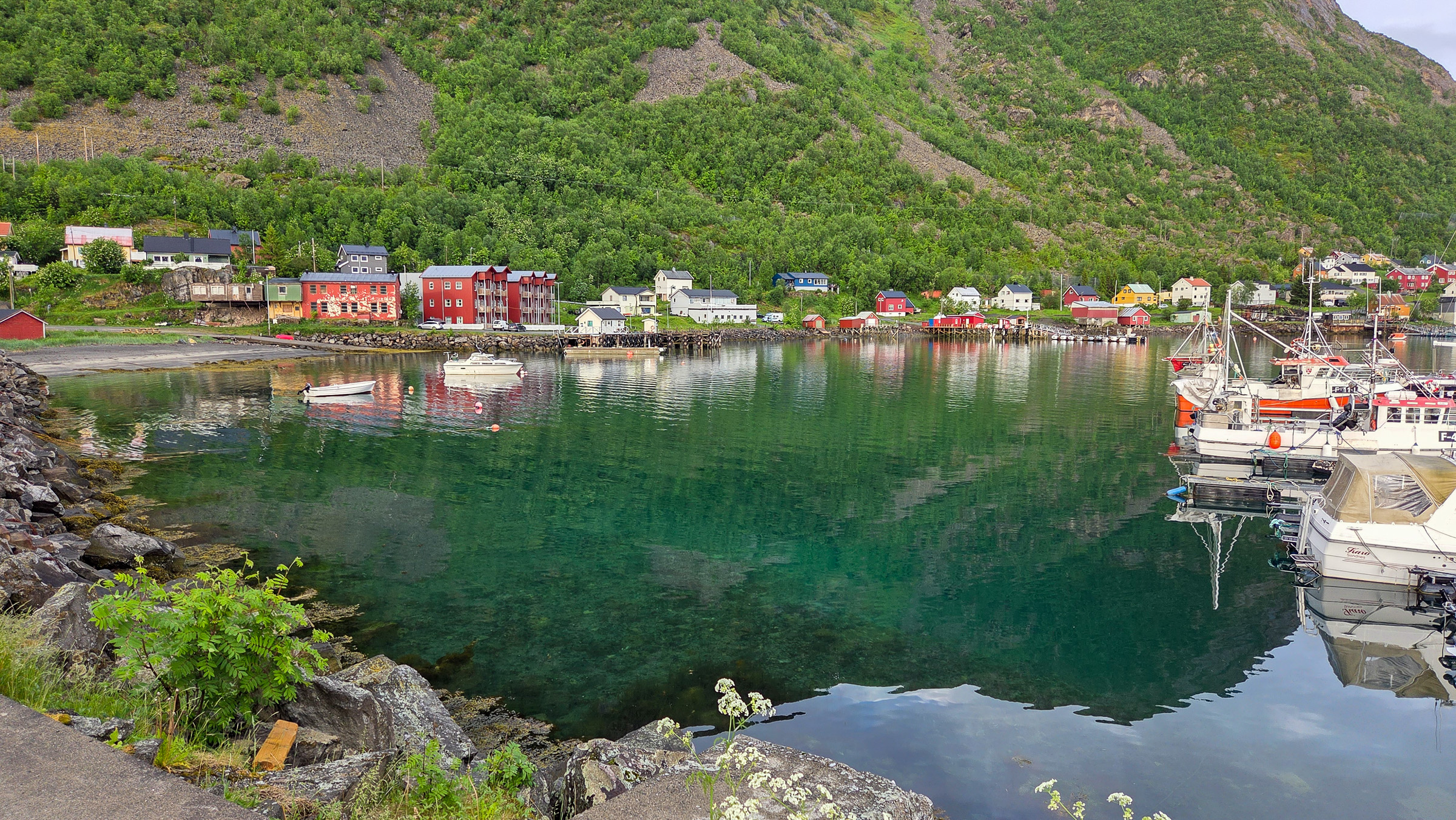
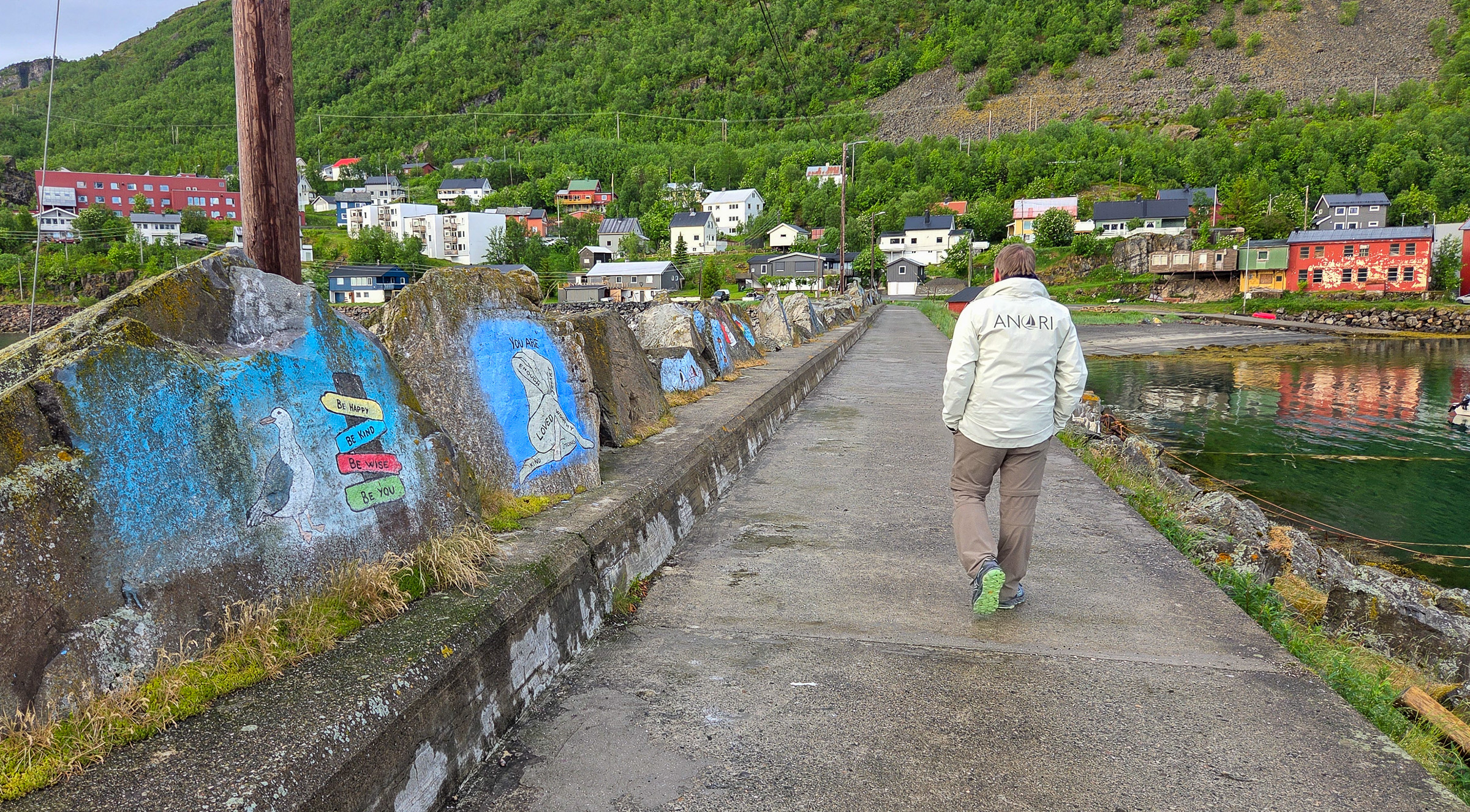
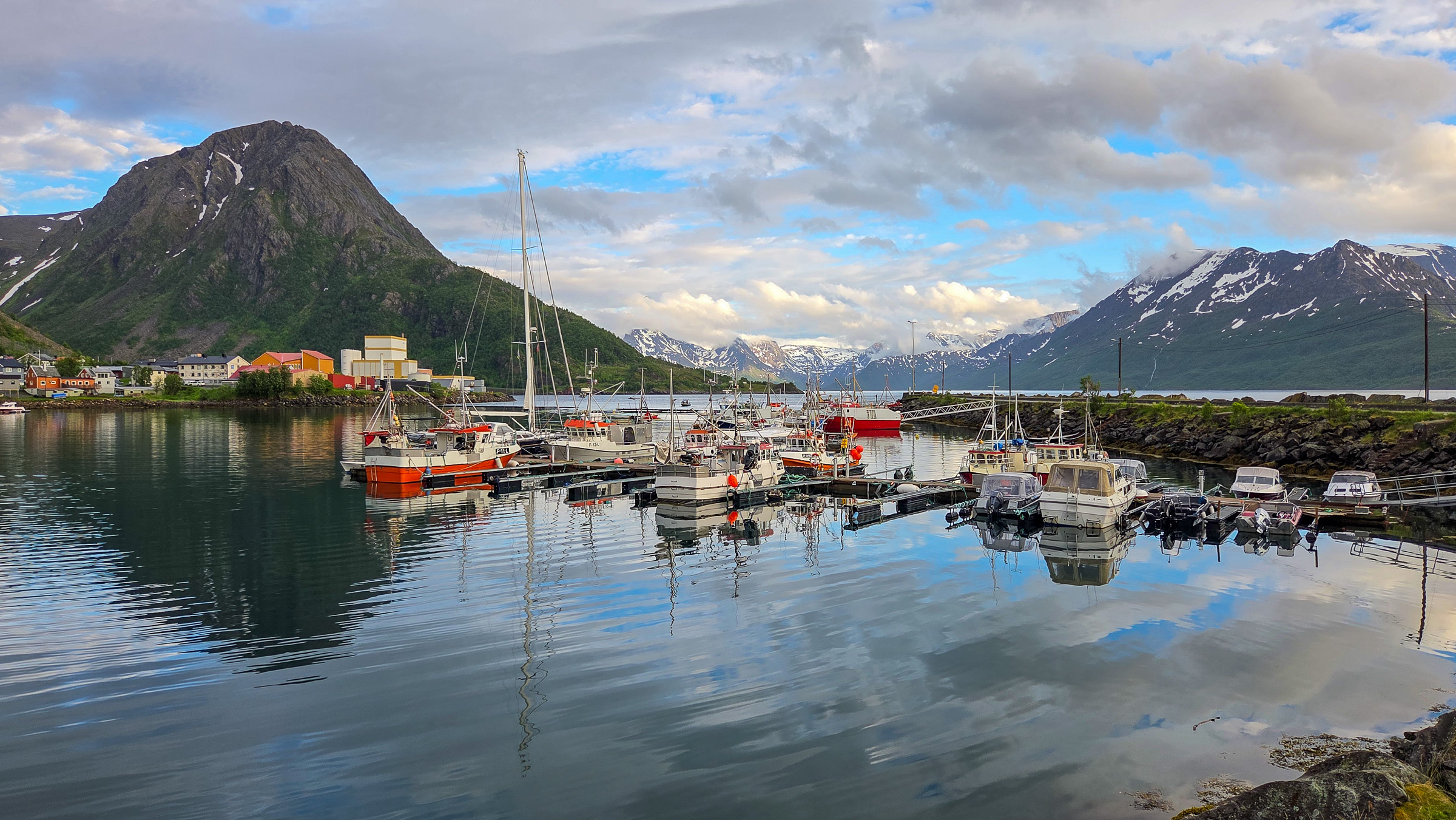
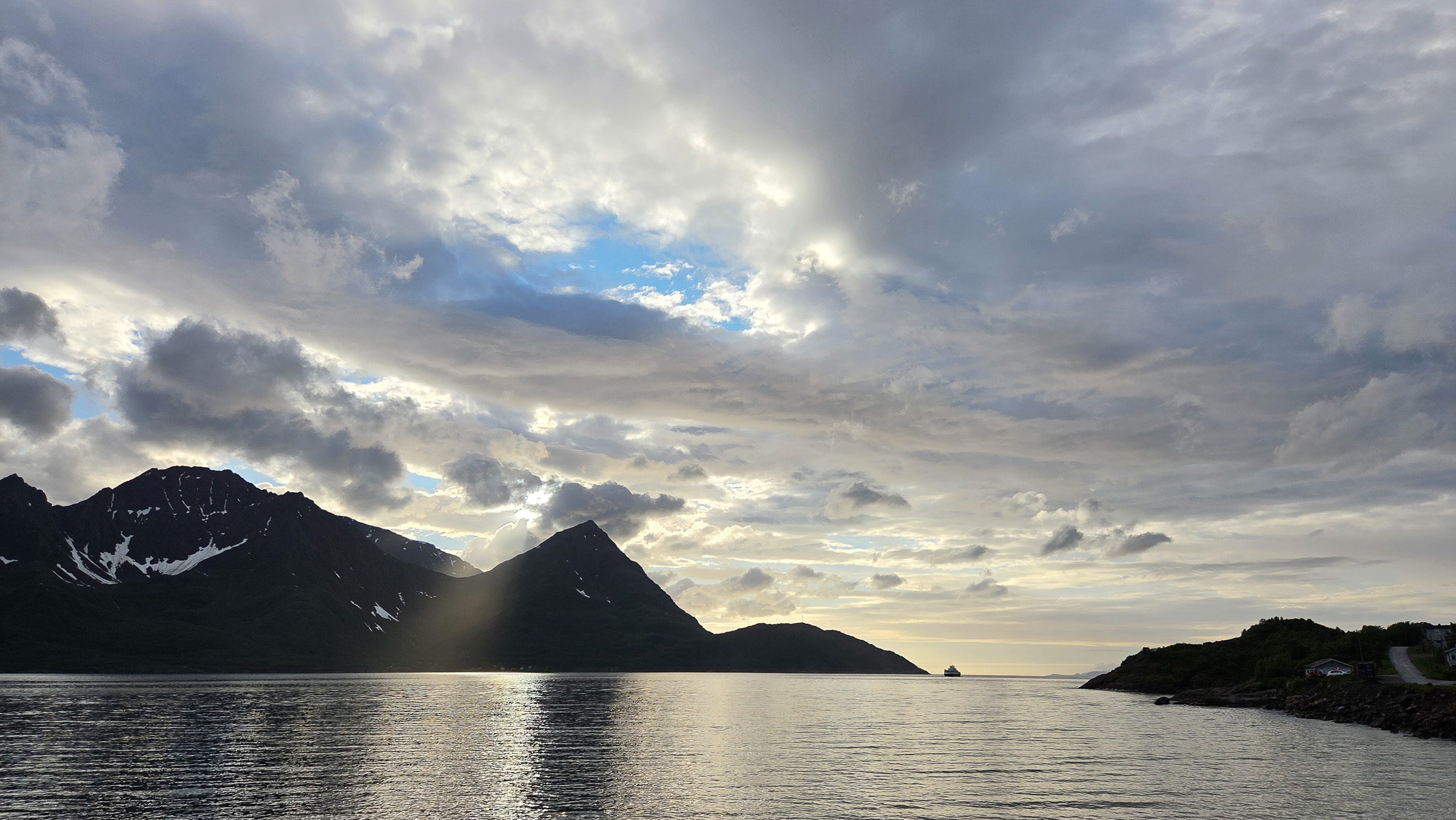
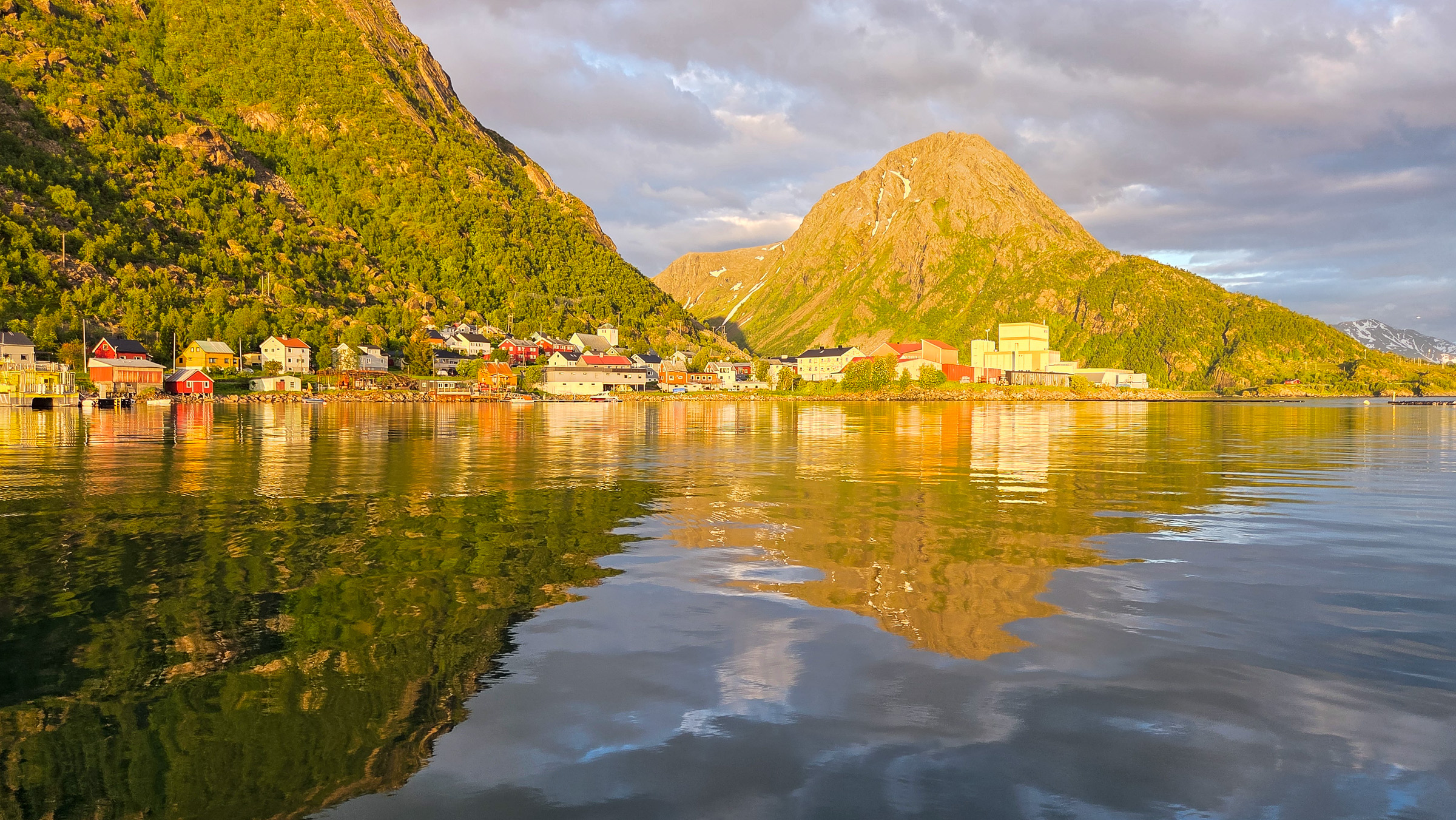
We arrive in Øksfjord in the rain and tie up alongside a rather rickety pier. At first, everything looks grey and uninviting. Later, however, the sun breaks through and the village reveals a much friendlier side. The midnight sun, in particular, bathes the houses on the hillside and the harbour in a warm, golden light. The following morning, we are also able to top up our fresh water tanks at the main quay. With full tanks, we set off for our next destination – the first planned anchorage of our voyage.
The wind is fresh and we are able to make good progress under sail. According to the forecast, however, the wind is expected to increase significantly during the night and early morning, so we decide it is safer to berth at the pier in Skjervøy. At the Maritim Hotel, we wait for what feels like forever for our dinner, but it turns out to be good and generous. In the end, we do not have to pay, as the chef had forgotten our order.
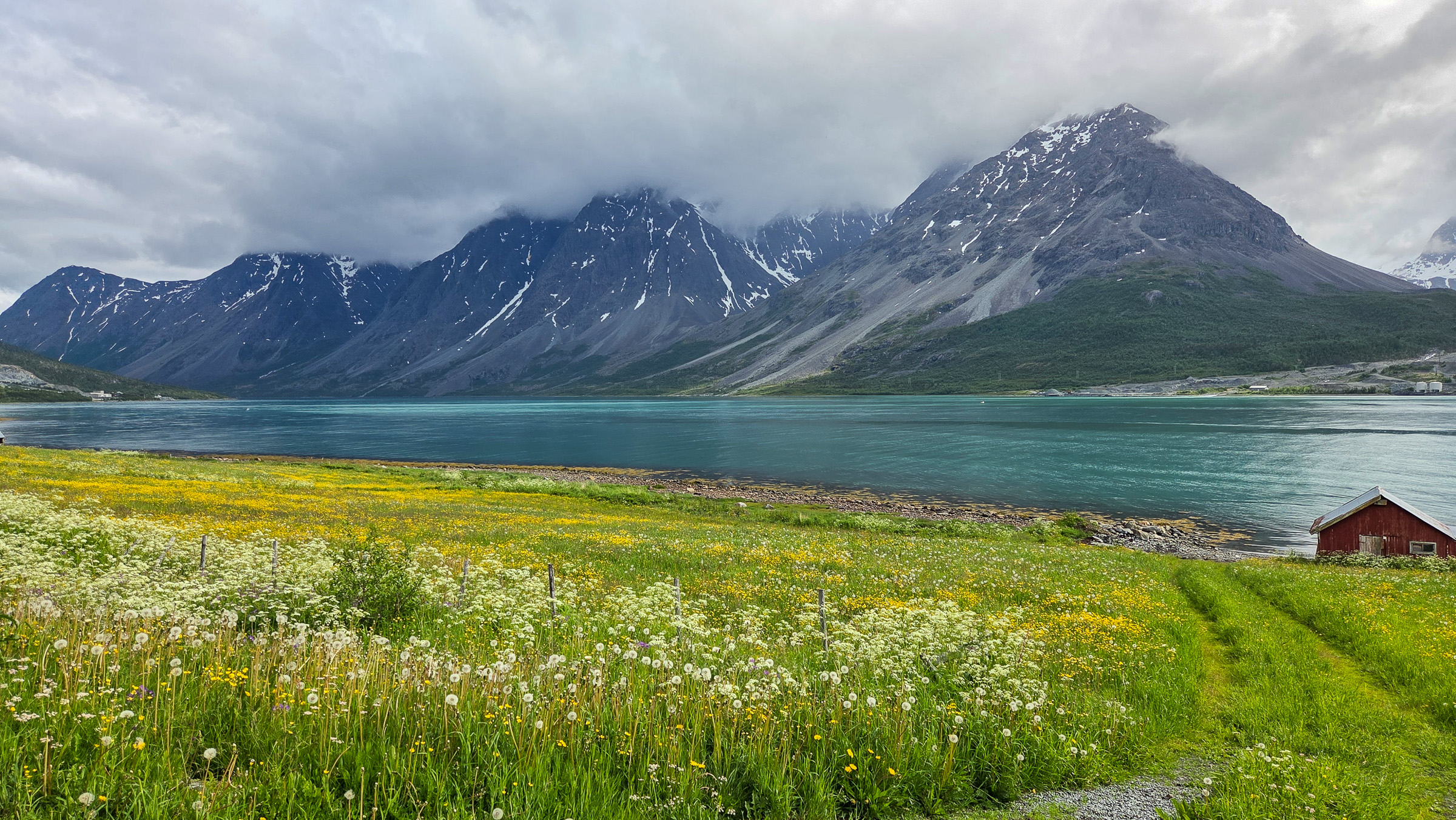
As predicted, the following day brings strong winds and heavy rain until midday. Afterwards, we continue towards Lyngseidet, a small village at the foot of the Lyngen Alps. We had already planned to visit this area once before, but the weather had prevented us from doing so. This time, too, the skies are mostly overcast.
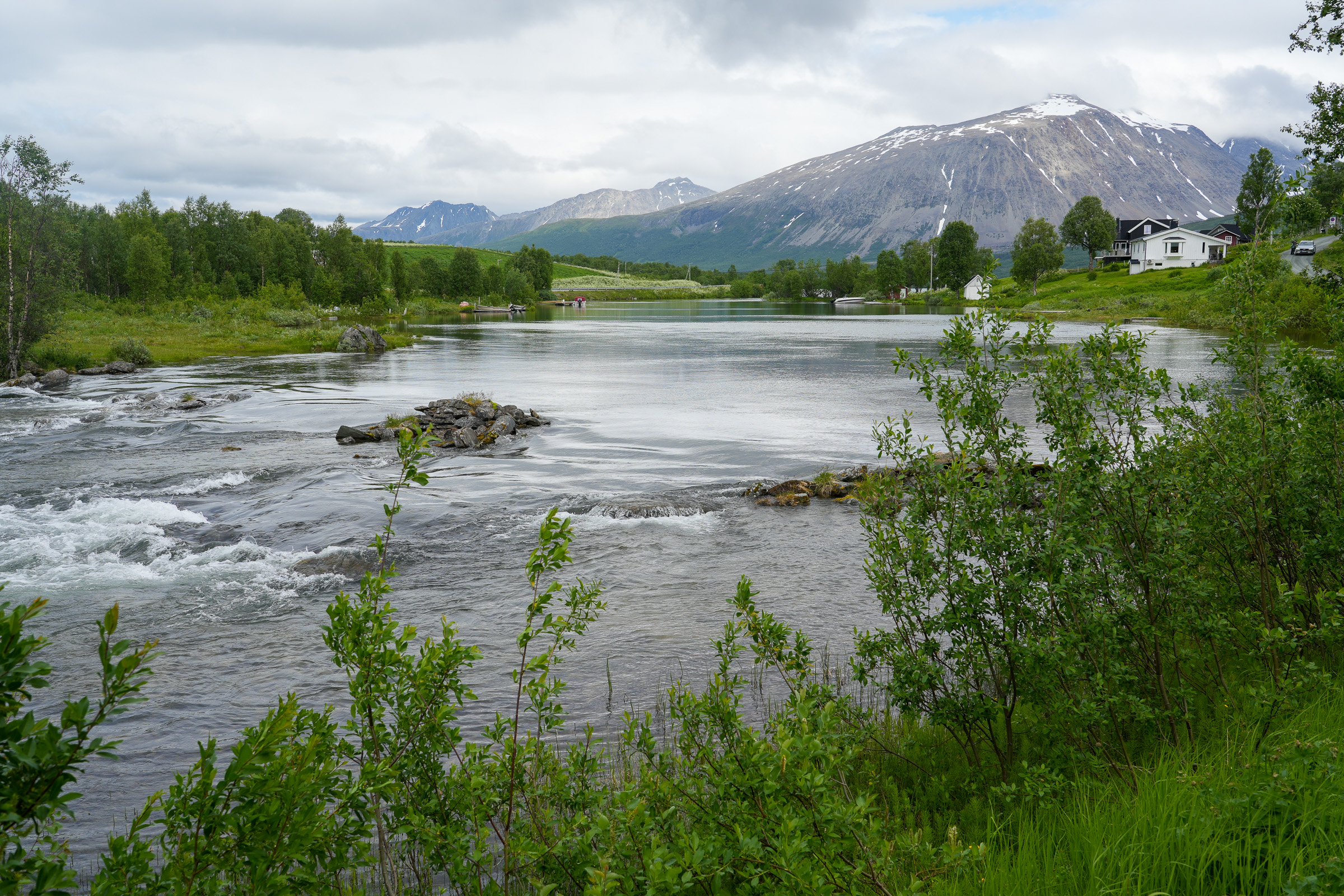
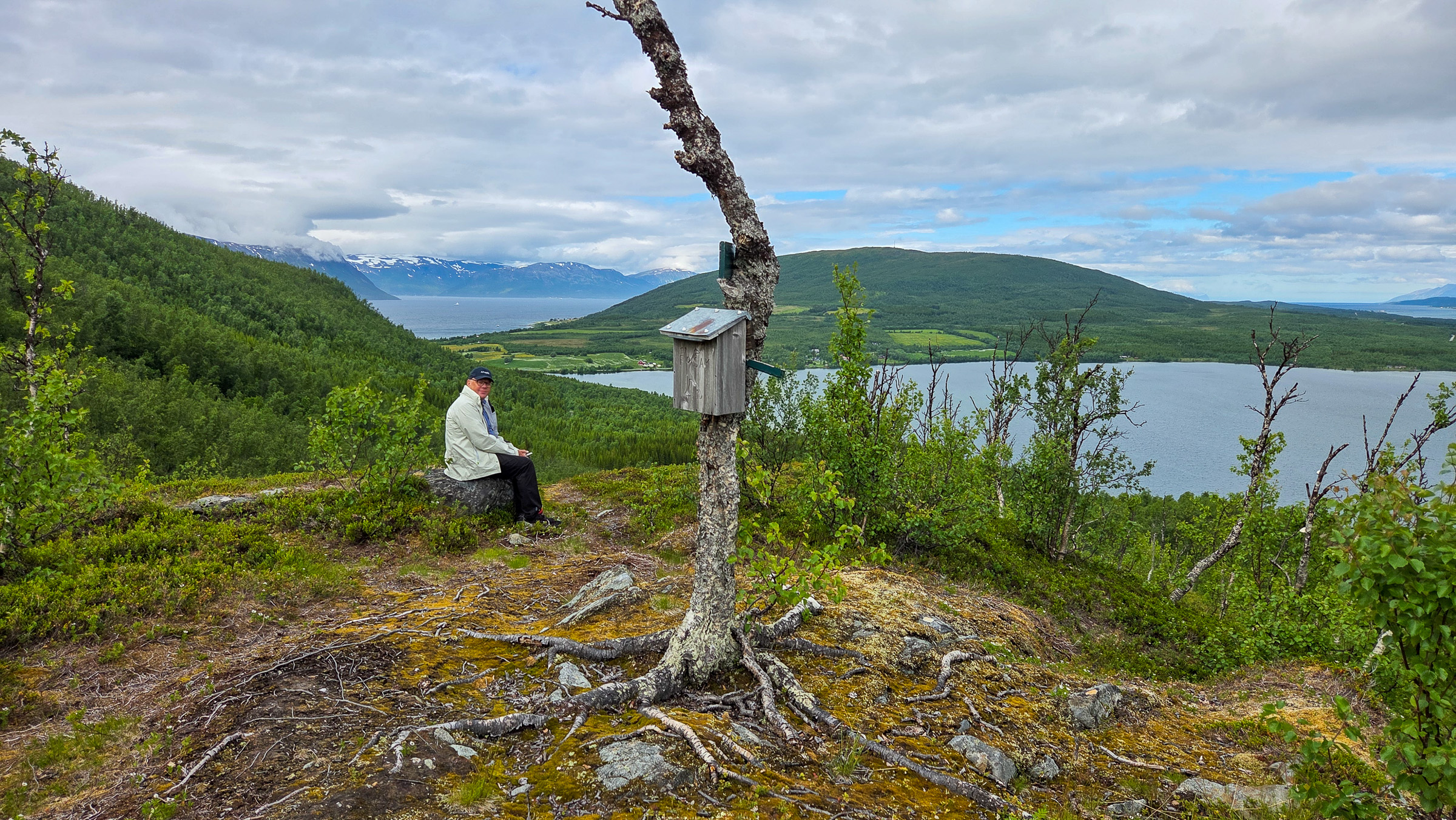
Nevertheless, the next morning we set off on a cycle tour to Jægervatnet, one of the most beautiful lakes in northern Norway. Unfortunately, the mountain peaks surrounding the lake are hidden in the clouds, and we have to battle a cold headwind on the way there. Once at the lake, we take a short hike up Storbakk, with views over the water and the surrounding mountains. The clouds briefly open, allowing sunlight to illuminate the stunning landscape.
After around 68 kilometres by bike and another four kilometres on foot, we return to Anori tired but happy. Following a hearty dinner of smoked salmon, which we bought from a private house along the way, we watch the opening match of the FIFA World Cup featuring the German national football team against Curaçao. During the match, an uncomfortable swell from the easterly wind makes Anori gently roll at the pier. Germany win, and the swell gradually eases, allowing us to enjoy a peaceful night’s sleep.
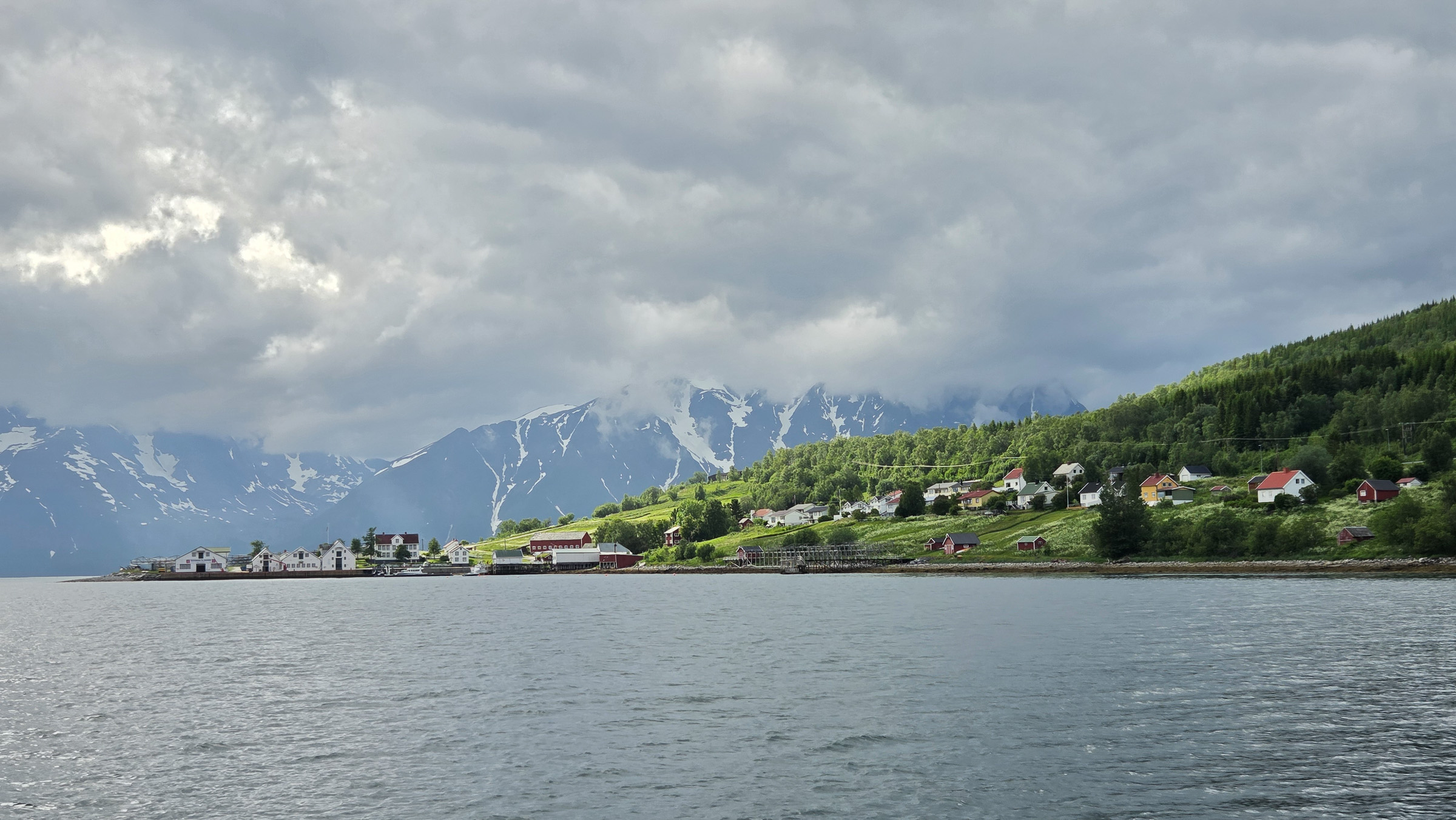
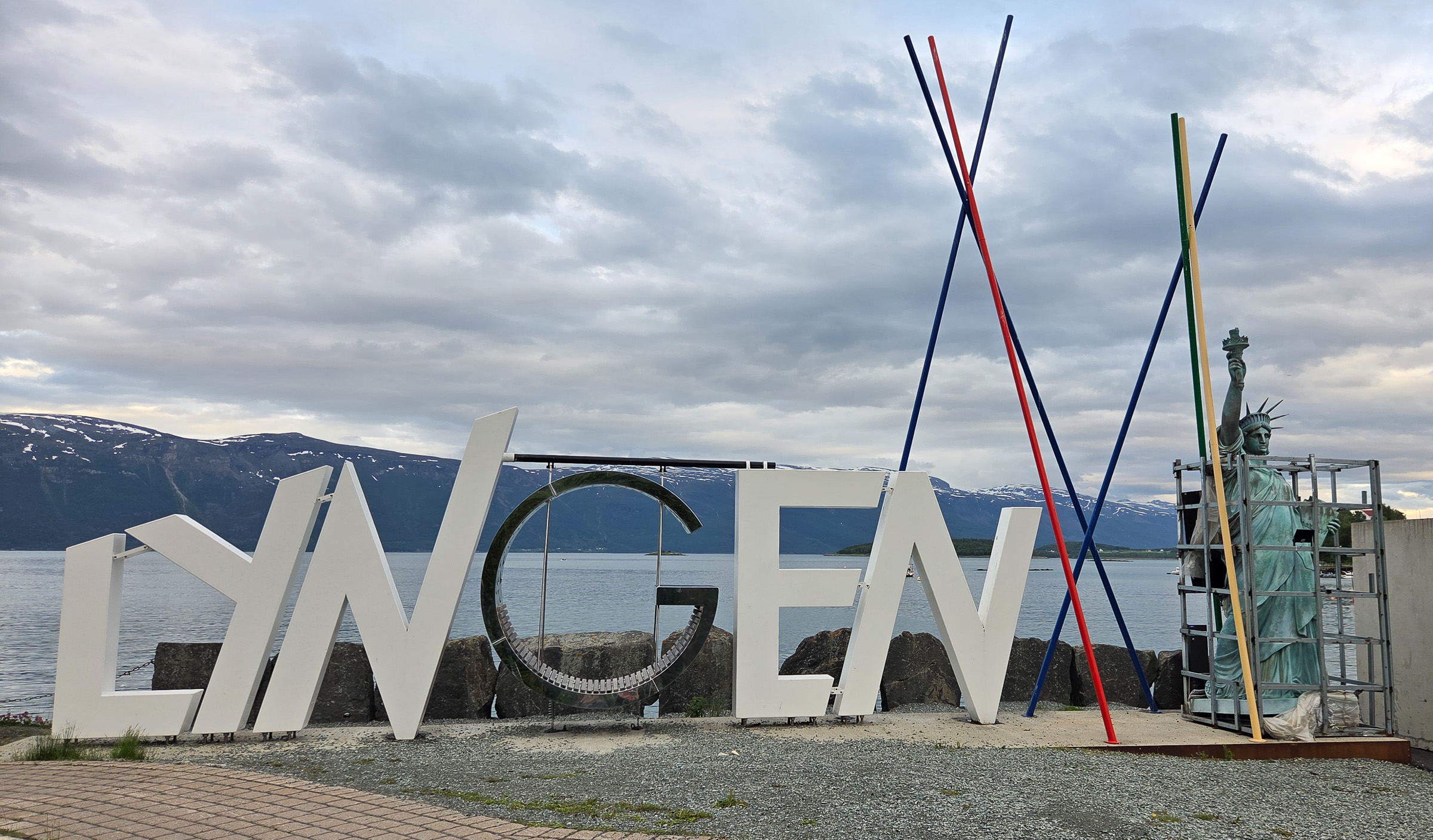
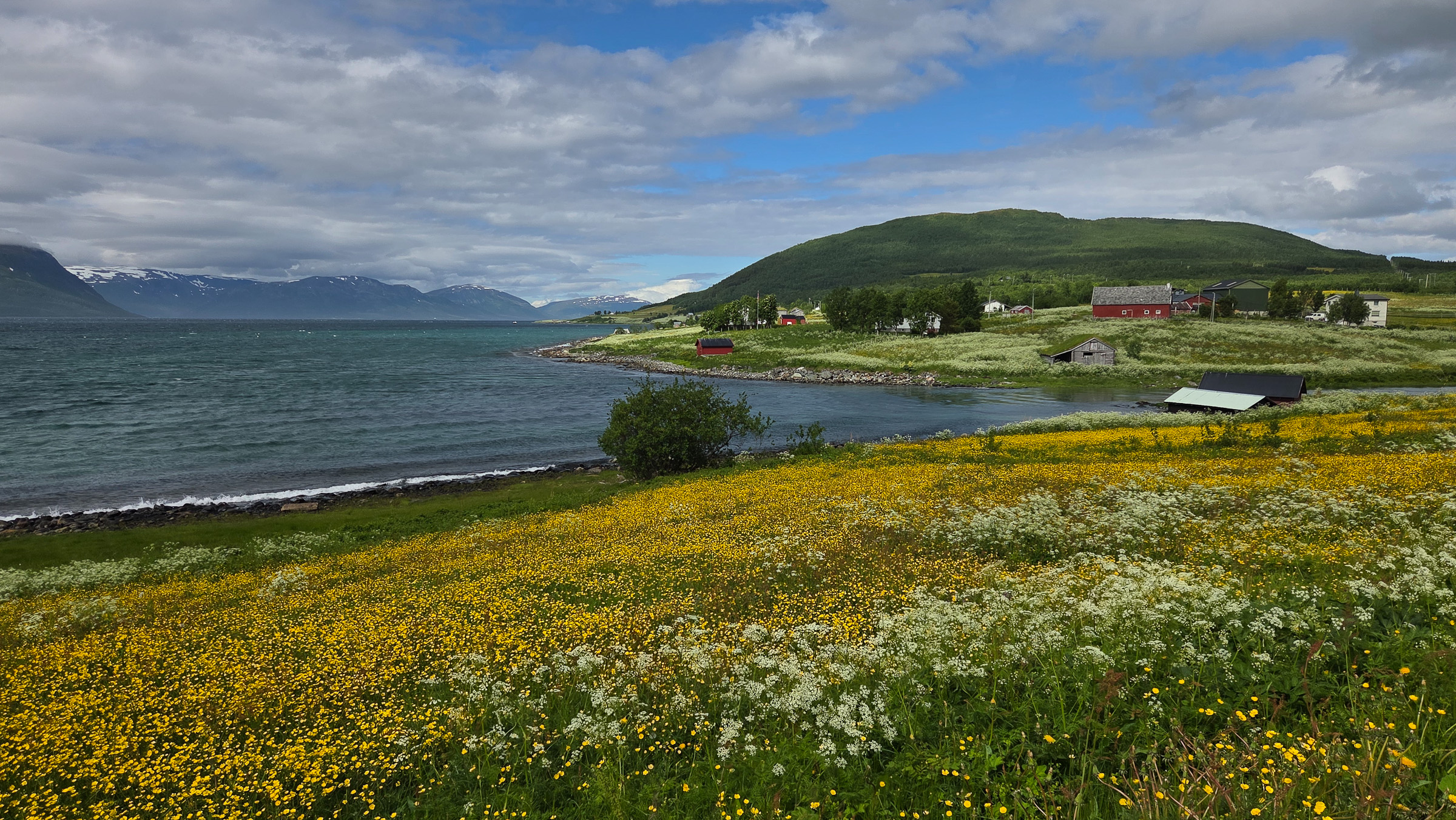
The next morning, we decide to skip the climb up the Sherpa steps. The clouds are hanging low over the mountains, hiding the summits from view. Instead, we enjoy a quiet start to the day and prepare for the next stage of our journey.
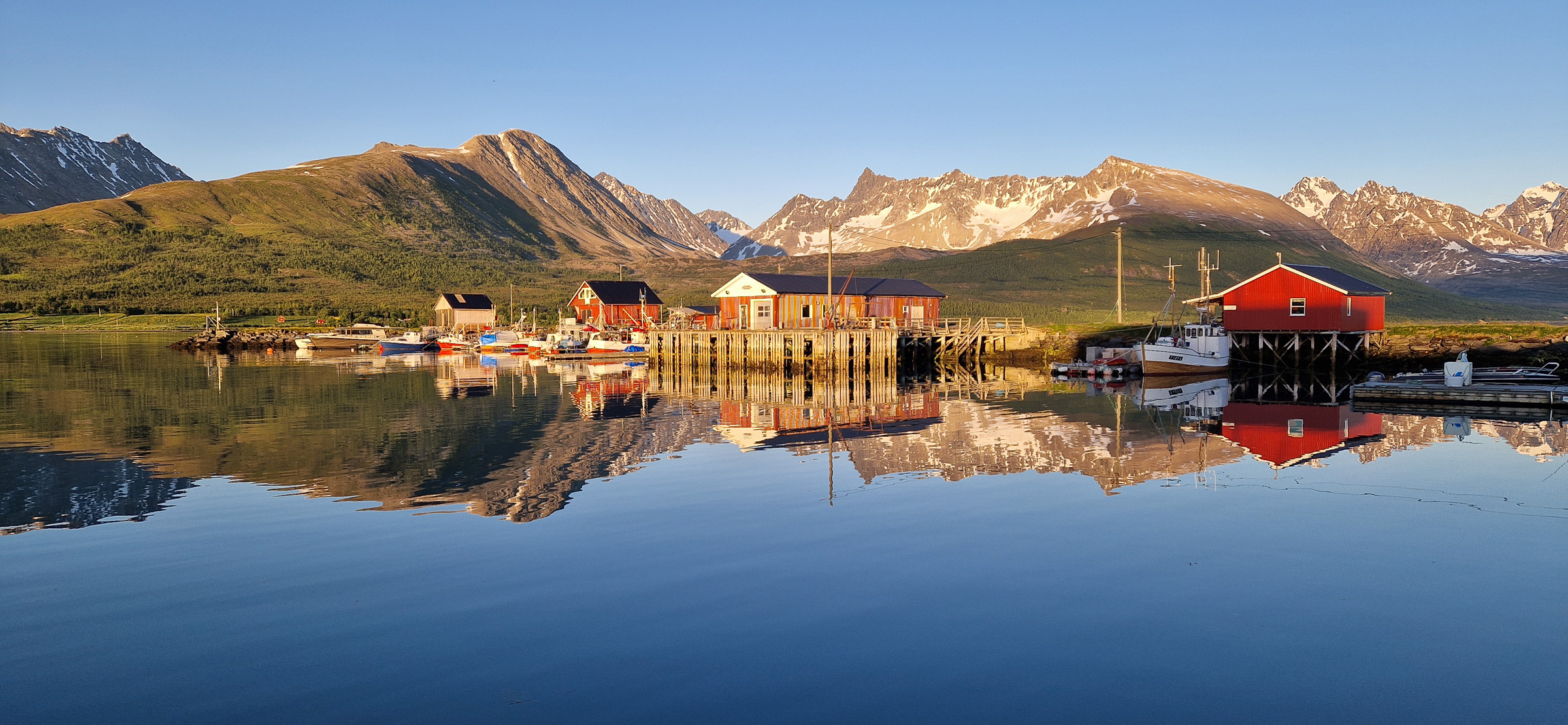
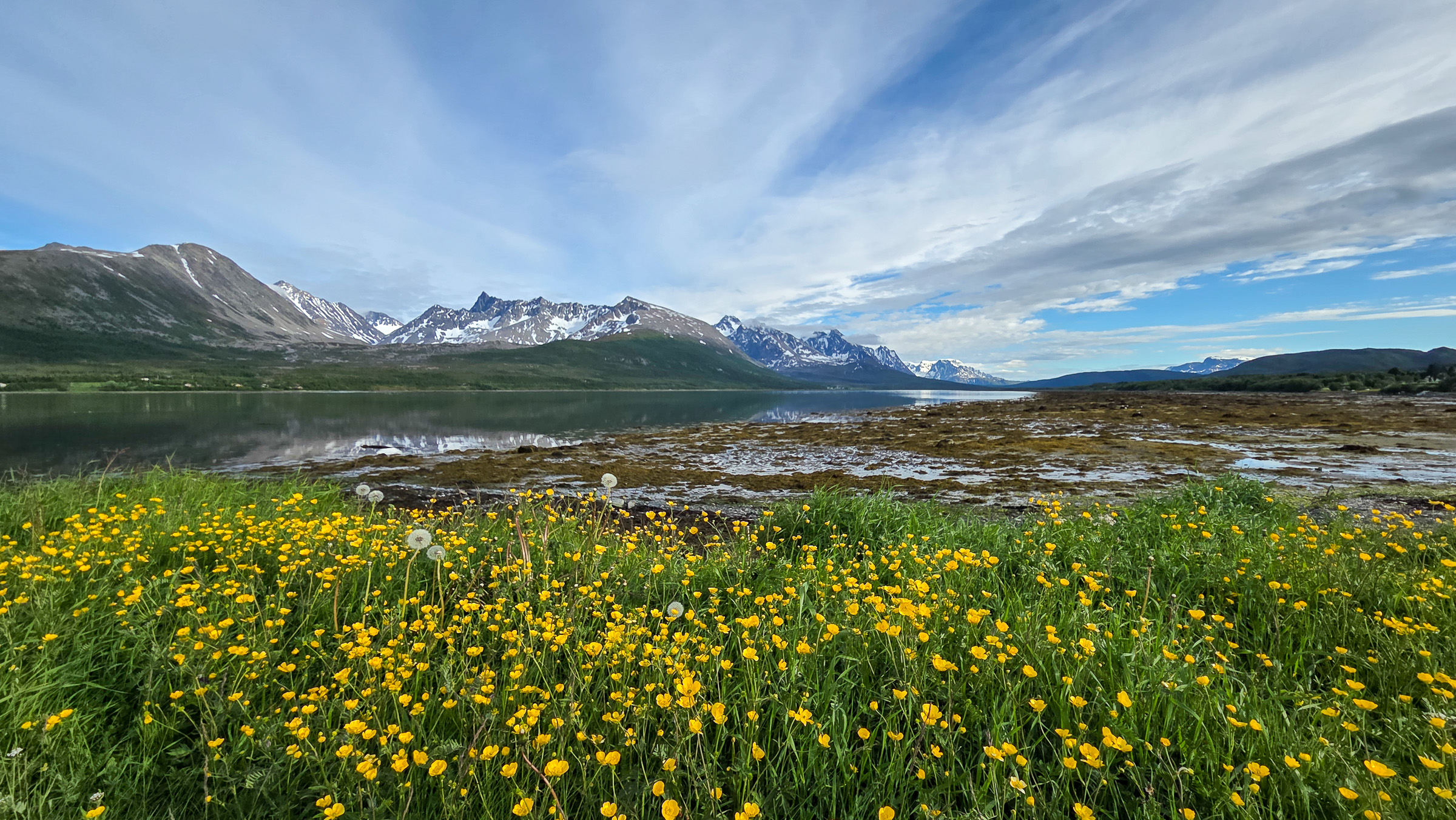
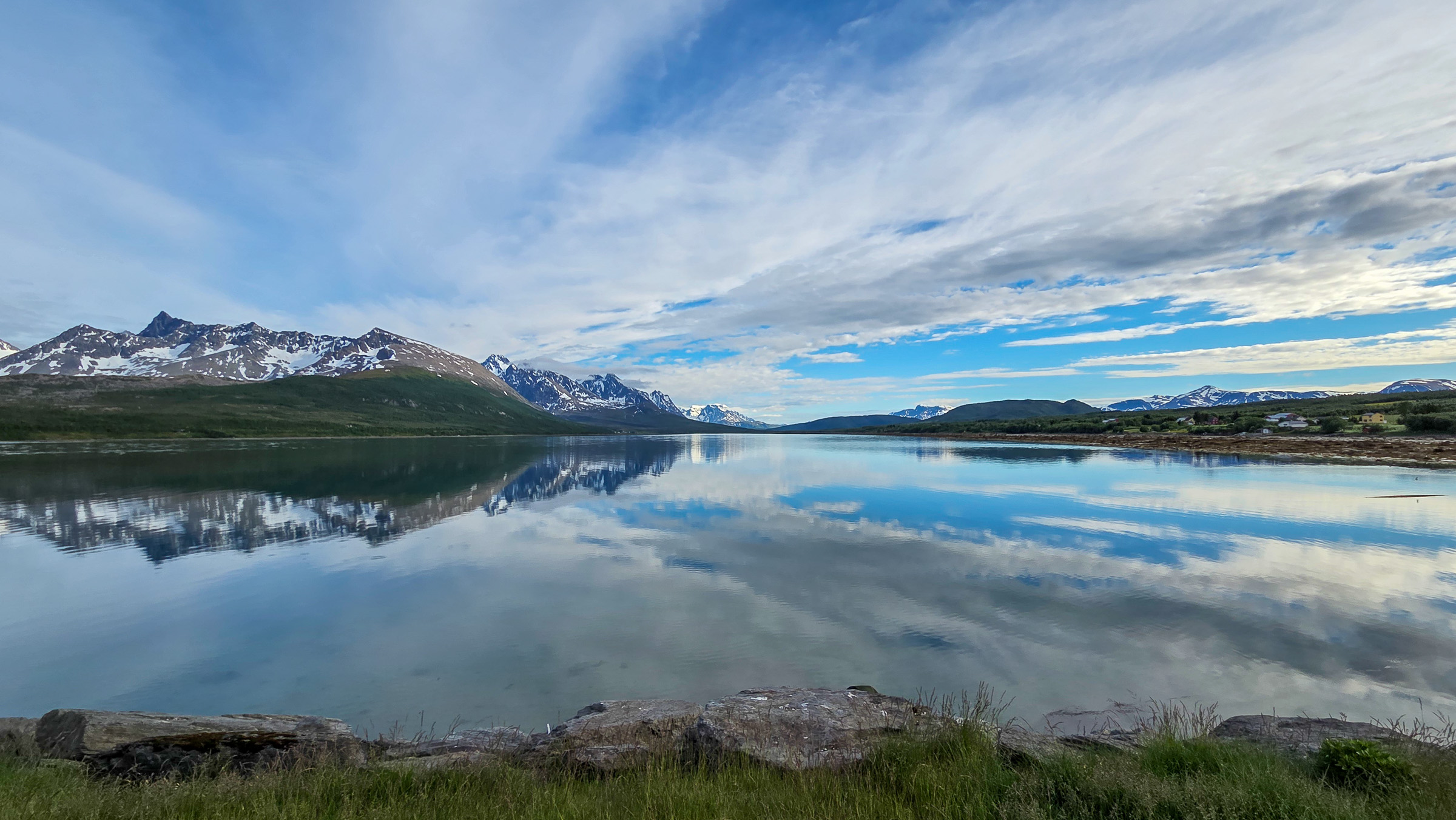
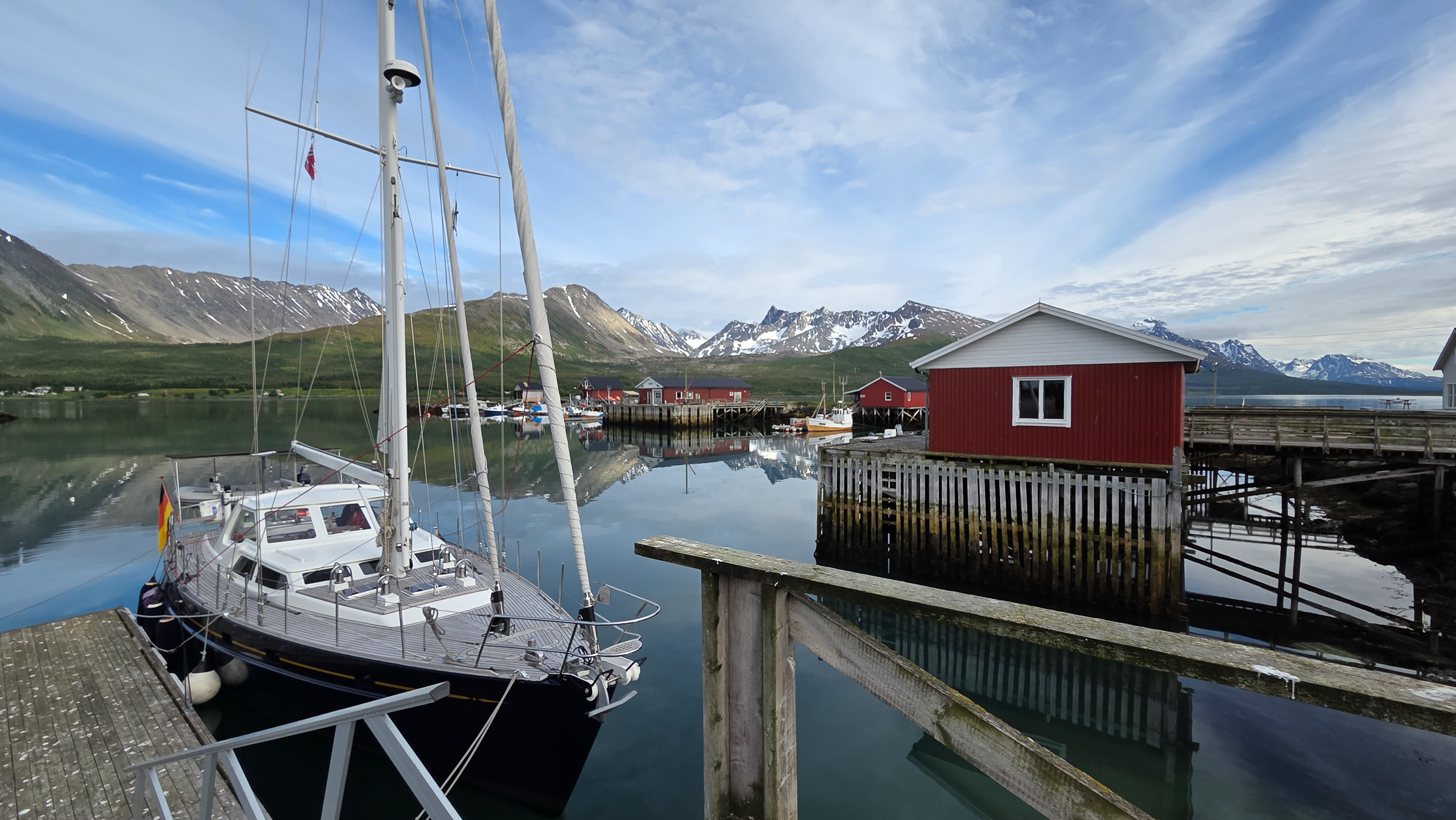
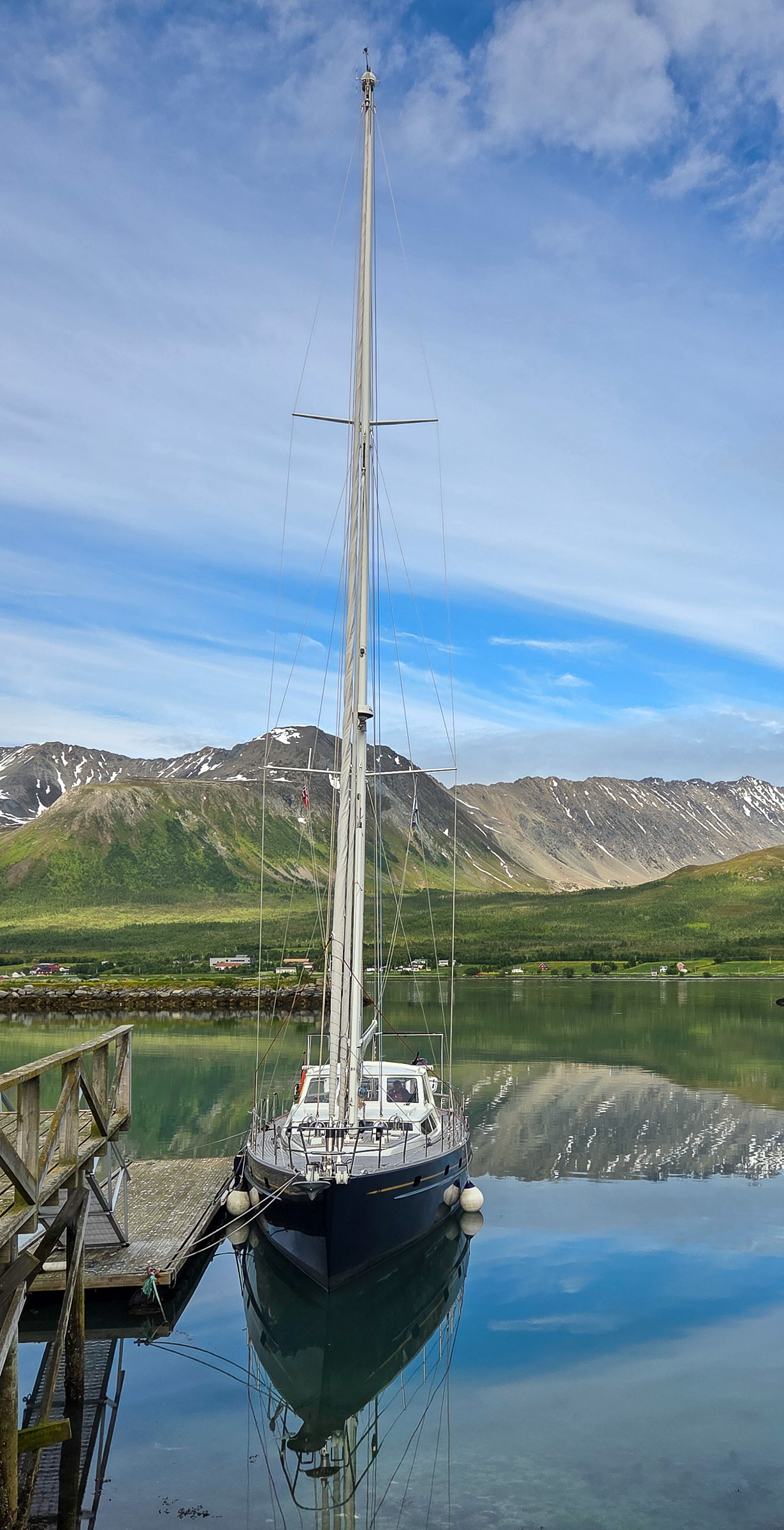
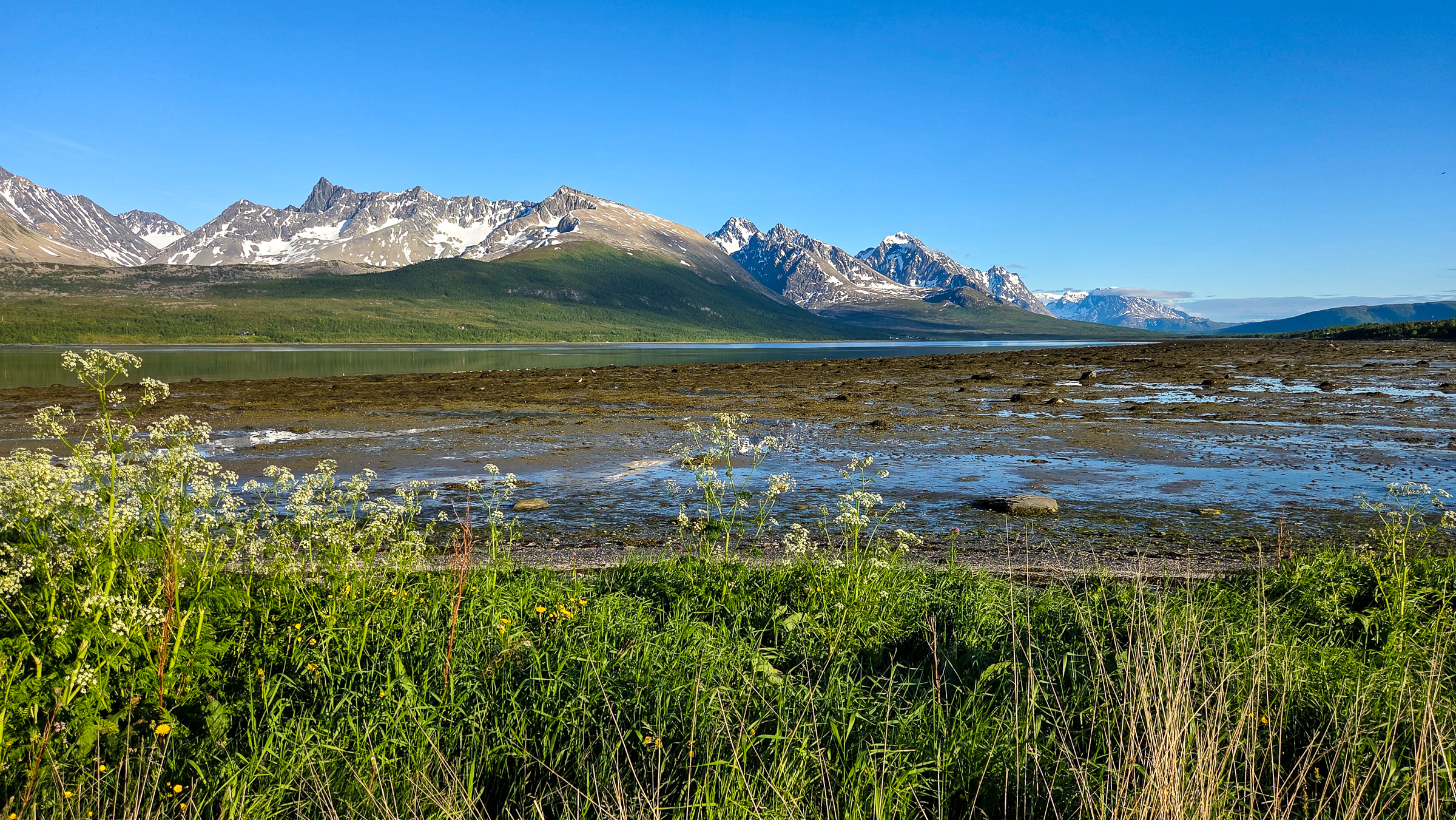
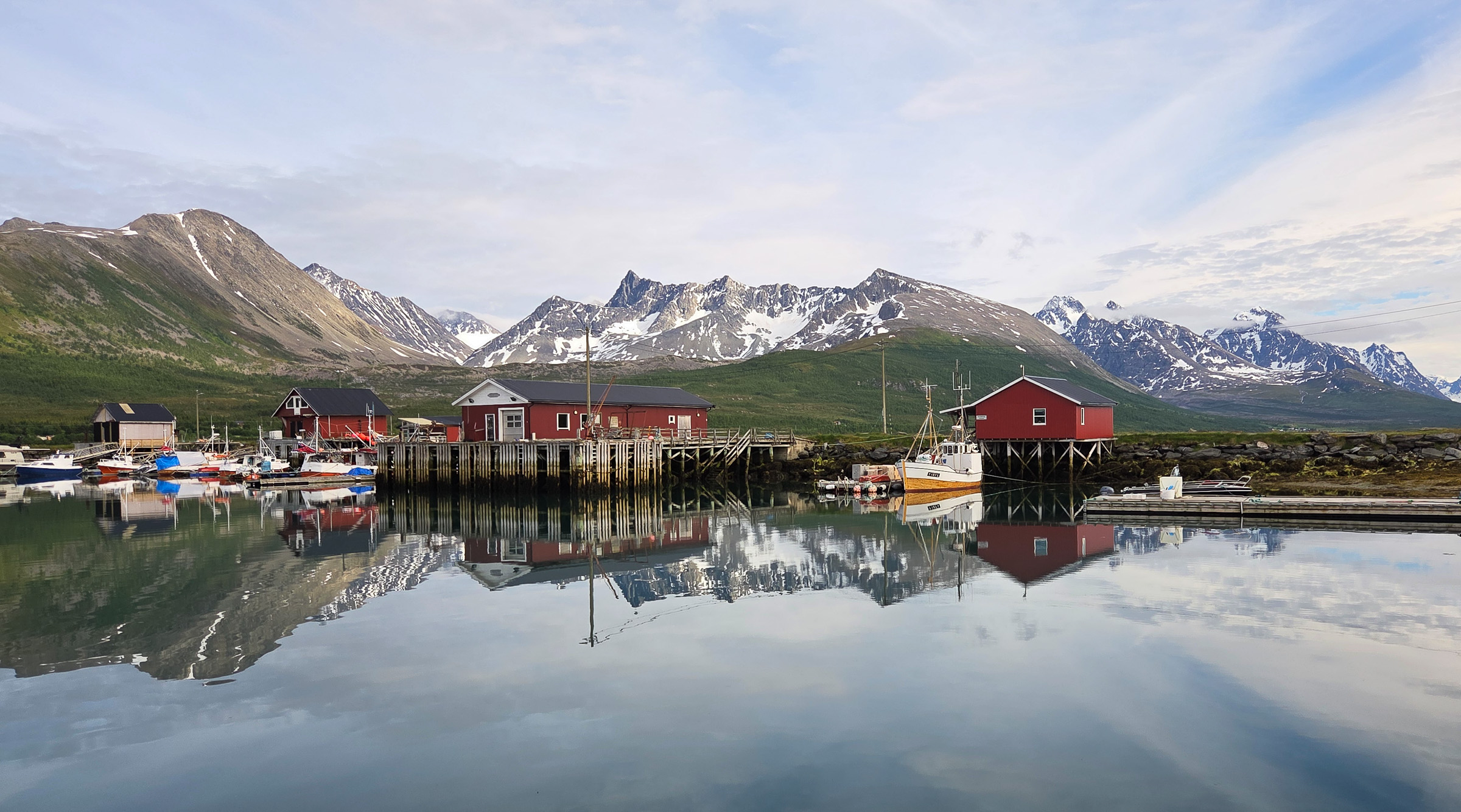
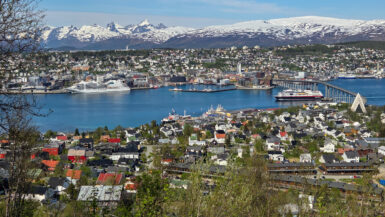
After initially motoring, we are able to sail well further up the Lyngen Fjord and continue to Lenangsøyra, a tiny fishing village with a shrimp processing plant. We are able to berth at their pier and spend a wonderfully calm night with hardly any wind. The sun finally breaks through completely and the clouds disappear. The view of the mountains is breathtaking in the warm evening light; at last, we get to experience the Lyngen Alps at their best. The following day, we sail to Tromsø in a fresh breeze.
Leave a reply