

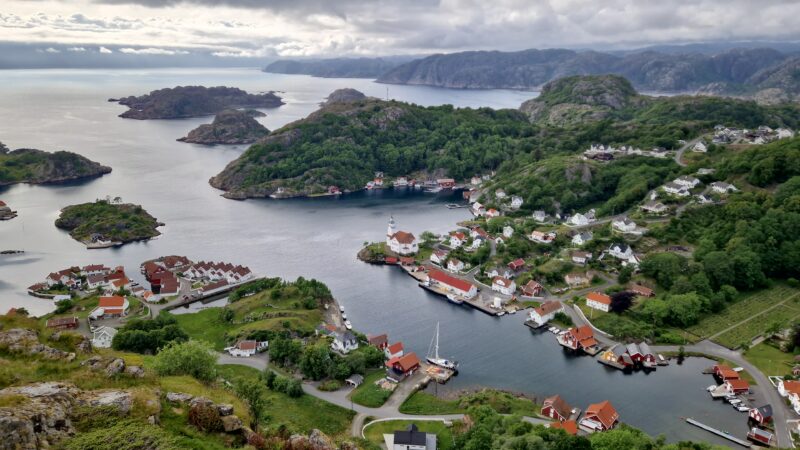
We arrived in Kirkehamn around midday, and the place fulfilled many of the clichés of a Norwegian fishing village – in a very positive way. A sheltered harbour with a fishermen’s cooperative, fishermen coming alongside to land their catch, and the opportunity to buy fish and prawns straight from the source. It made for an excellent first impression of Norway.
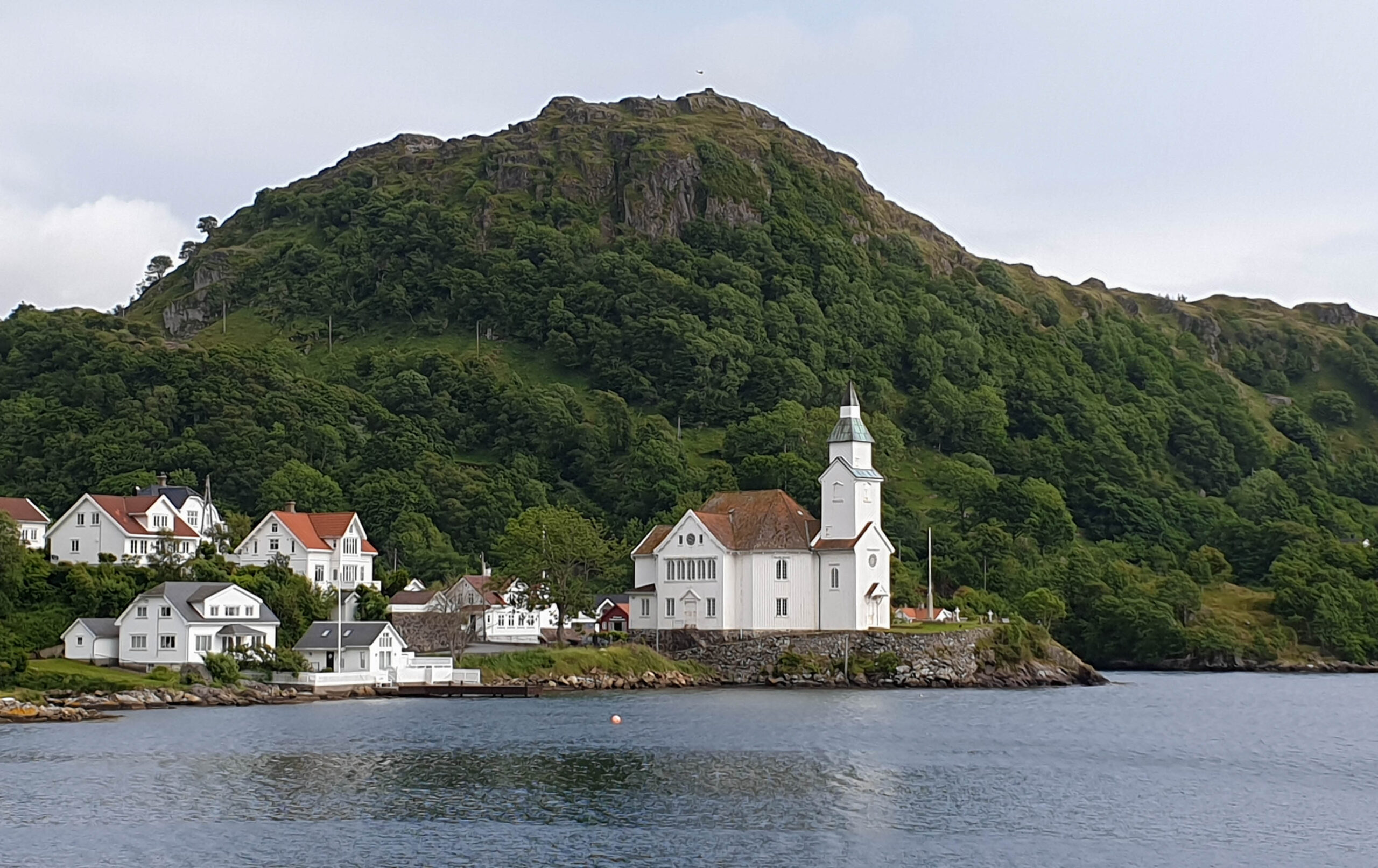
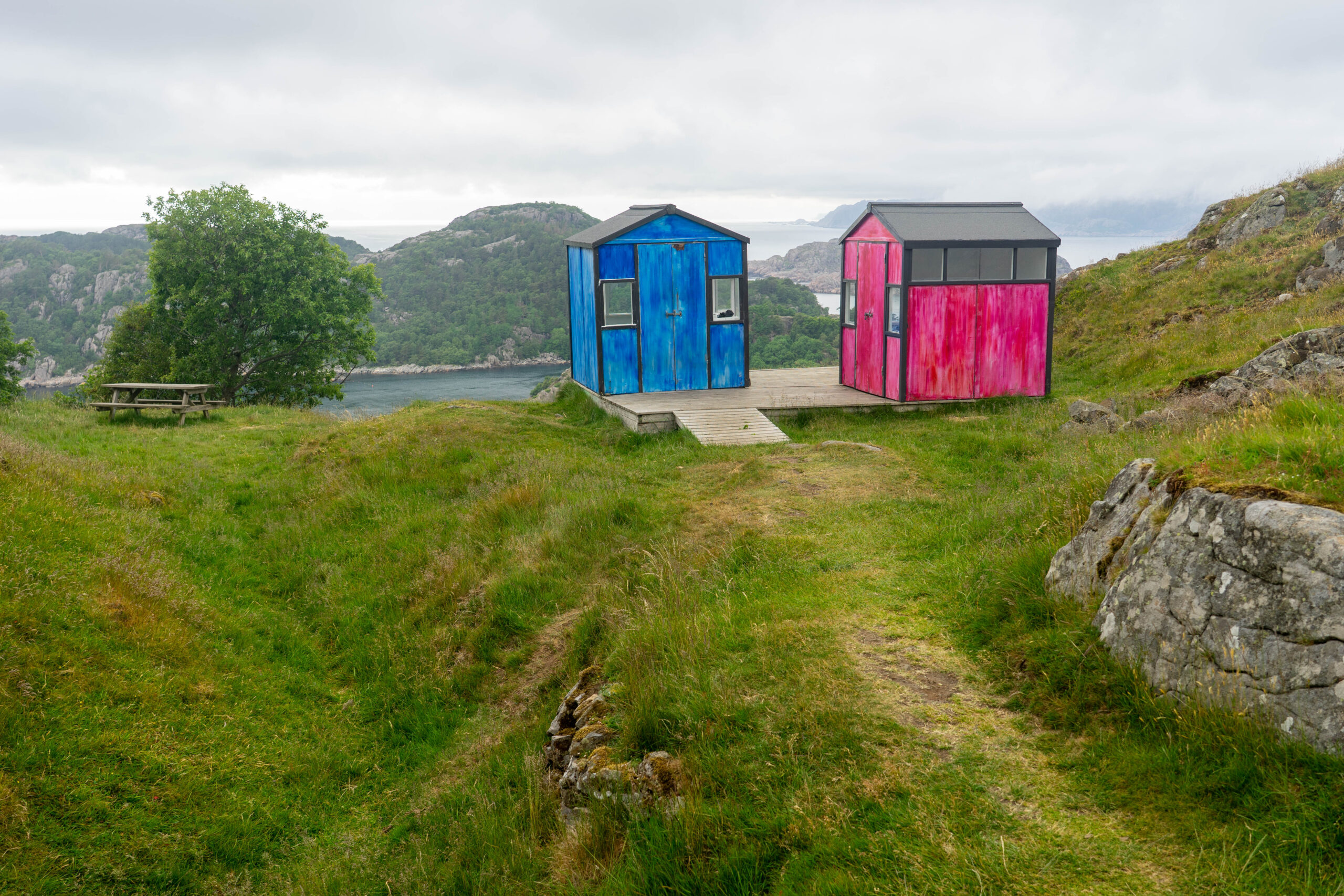
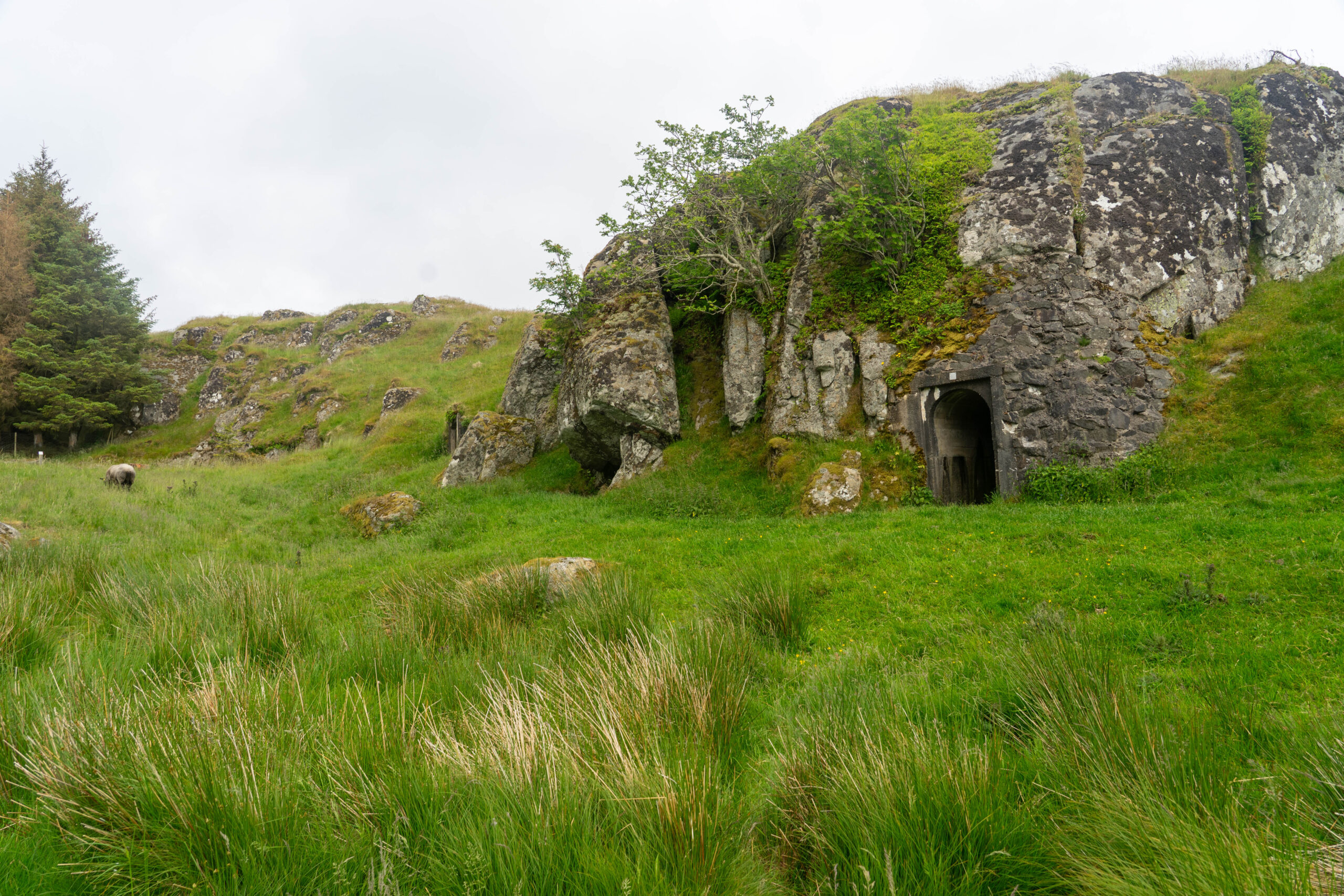
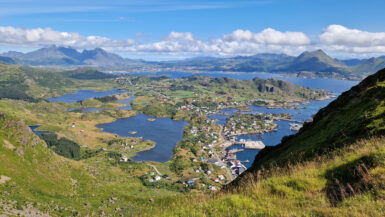
We spent the afternoon climbing up to the Hågåsen viewpoint with its German fortress dating from the Second World War, which offered several opportunities for fine photographs of the village and the coastline. The following day we first put the boat in order and repaired the toilet. In between, the harbourmaster paid us a visit. He is responsible for Flekkefjord, Kirkehamn and the surrounding area, and we discussed with him the reporting requirements for recreational vessels and the general situation in Norwegian harbours.
As Anori is a vessel over 15 metres in length, new regulations have applied to us since 1 January 2025, slightly limiting our flexibility. Before departure we had registered both ourselves and Anori with all the required details in the relevant online portal. For our stay in Norwegian territorial waters the following applies:
1. We must report every movement, including planned time of departure (ETD), destination harbour and planned time of arrival (ETA). We do this by email, using a concise, established format. In practice this causes no real restrictions and communication is relaxed.
2. Anchoring is only permitted once we have obtained approval, including the exact coordinates of the anchorage as well as ETA and ETD.
3. Even going ashore by dinghy requires prior authorisation.
The harbourmaster, who explicitly welcomes foreign sailors, explained that illegal immigration and unclear activities by foreign vessels were the triggers for these measures. This was understandable, and as guests in a foreign country we complied with the rules. Nevertheless, the feeling of freedom suffered noticeably, as we could no longer simply drop anchor spontaneously in a beautiful bay.
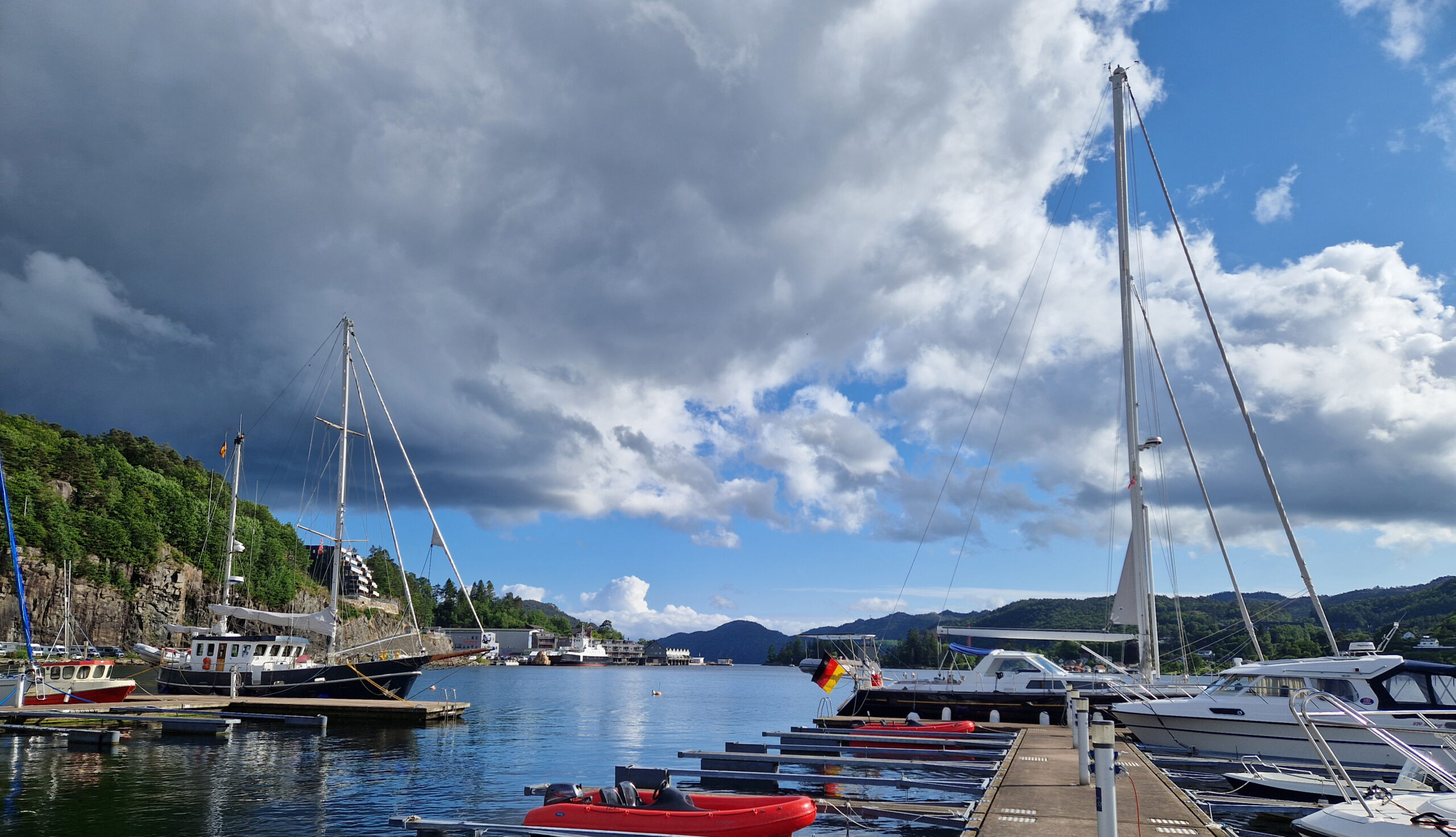
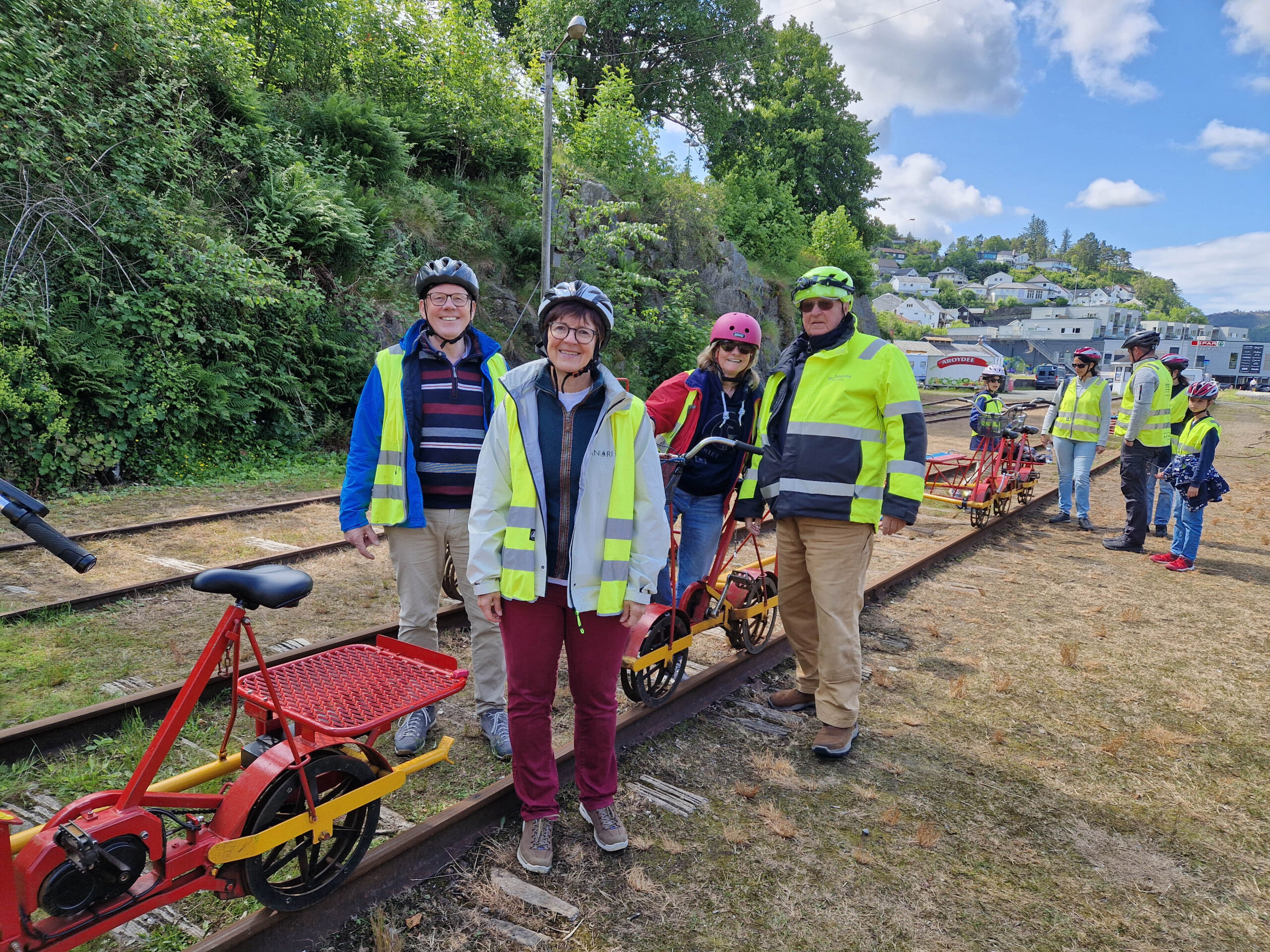
From Kirkehamn our next short leg took us to Flekkefjord. We had already been in contact with Marlene and Bert from Heimkehr, and when we arrived they were waiting for us on the pontoon. Hardly had we tied up when we were already sitting over coffee aboard Heimkehr. Over the following two days we met several times for meals and small activities. One highlight was a trip on the Flekkefjord Railway, using pedal-powered rail bikes. On the second day we rounded things off with a farewell nightcap aboard Heimkehr.
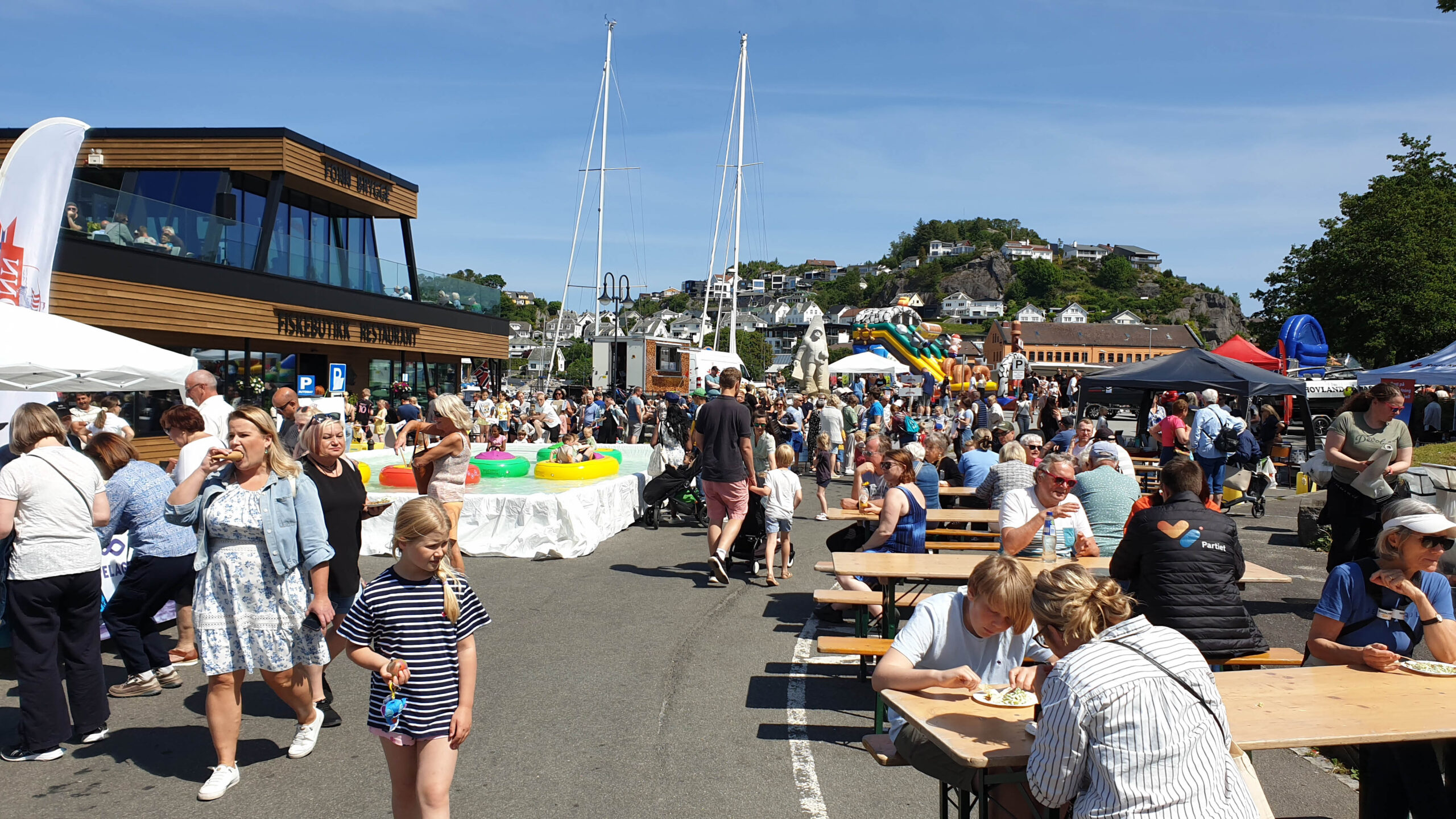
The next morning we continued on course for Egersund, while Leni and Bert departed at 08:00 heading for Scotland and Inverness. In Egersund a fishermen’s festival was taking place in the harbour directly in front of our boat. There was plenty of interesting information about the local fishing industry, along with all sorts of seafood specialities, which we were happy to sample.
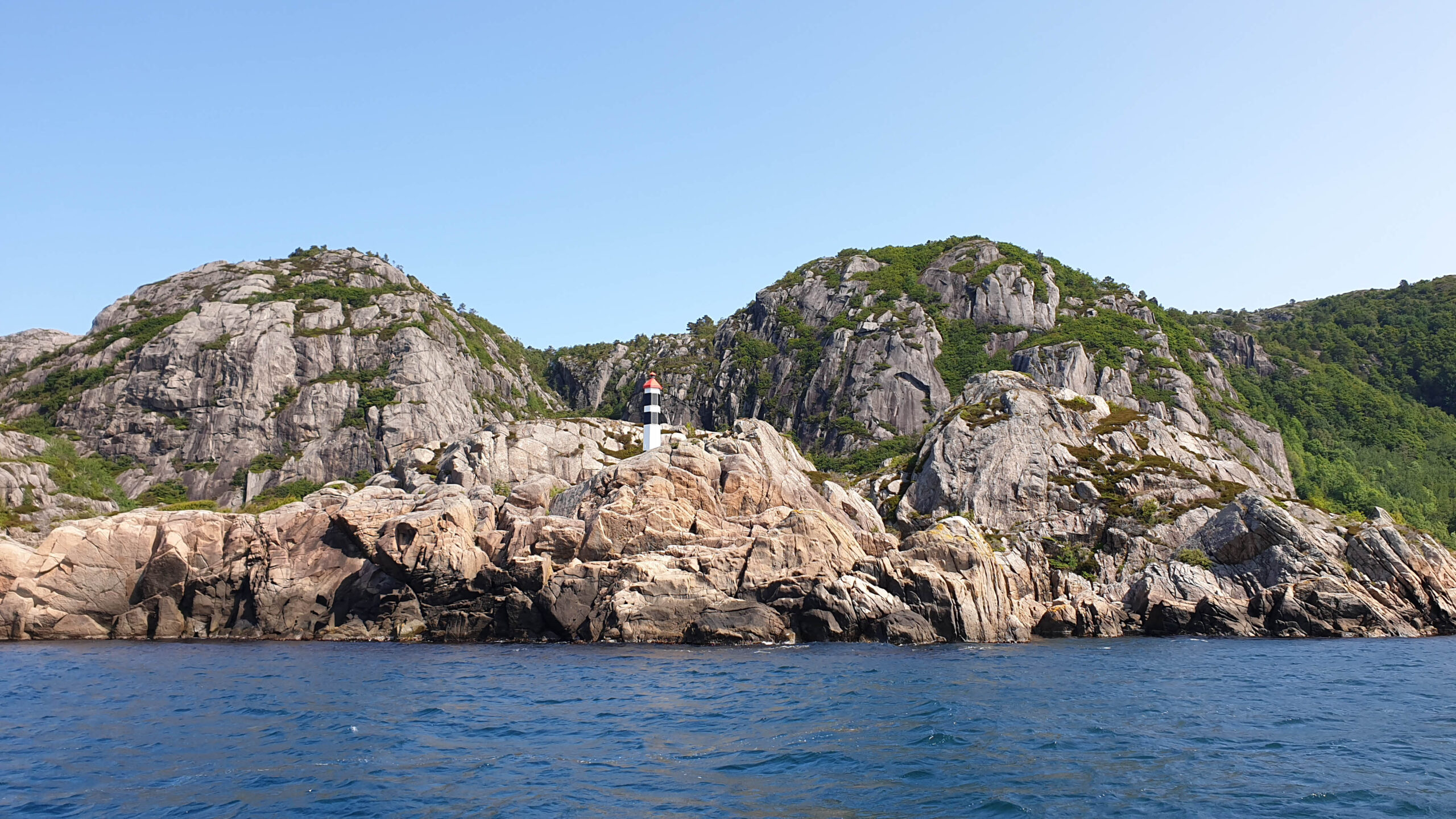
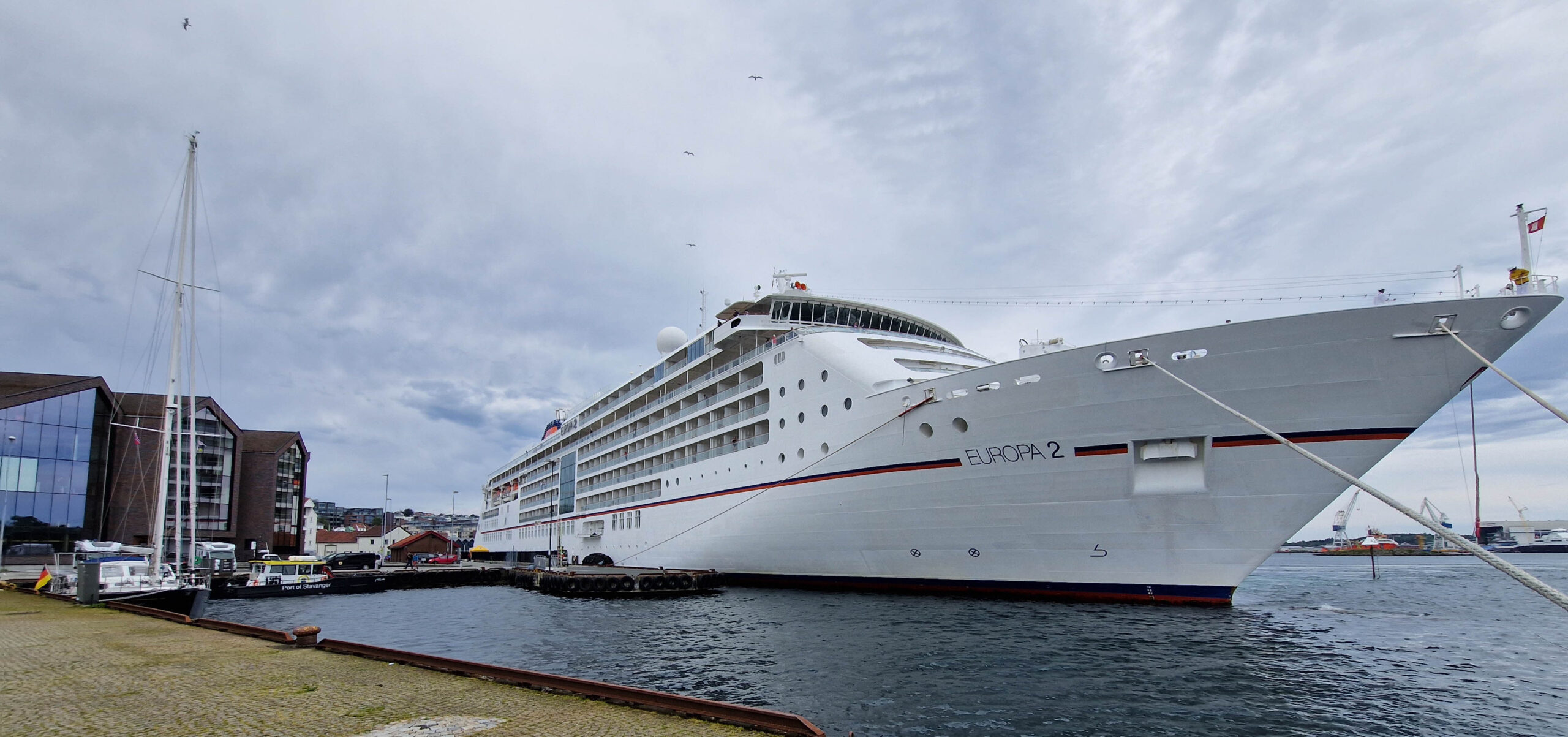
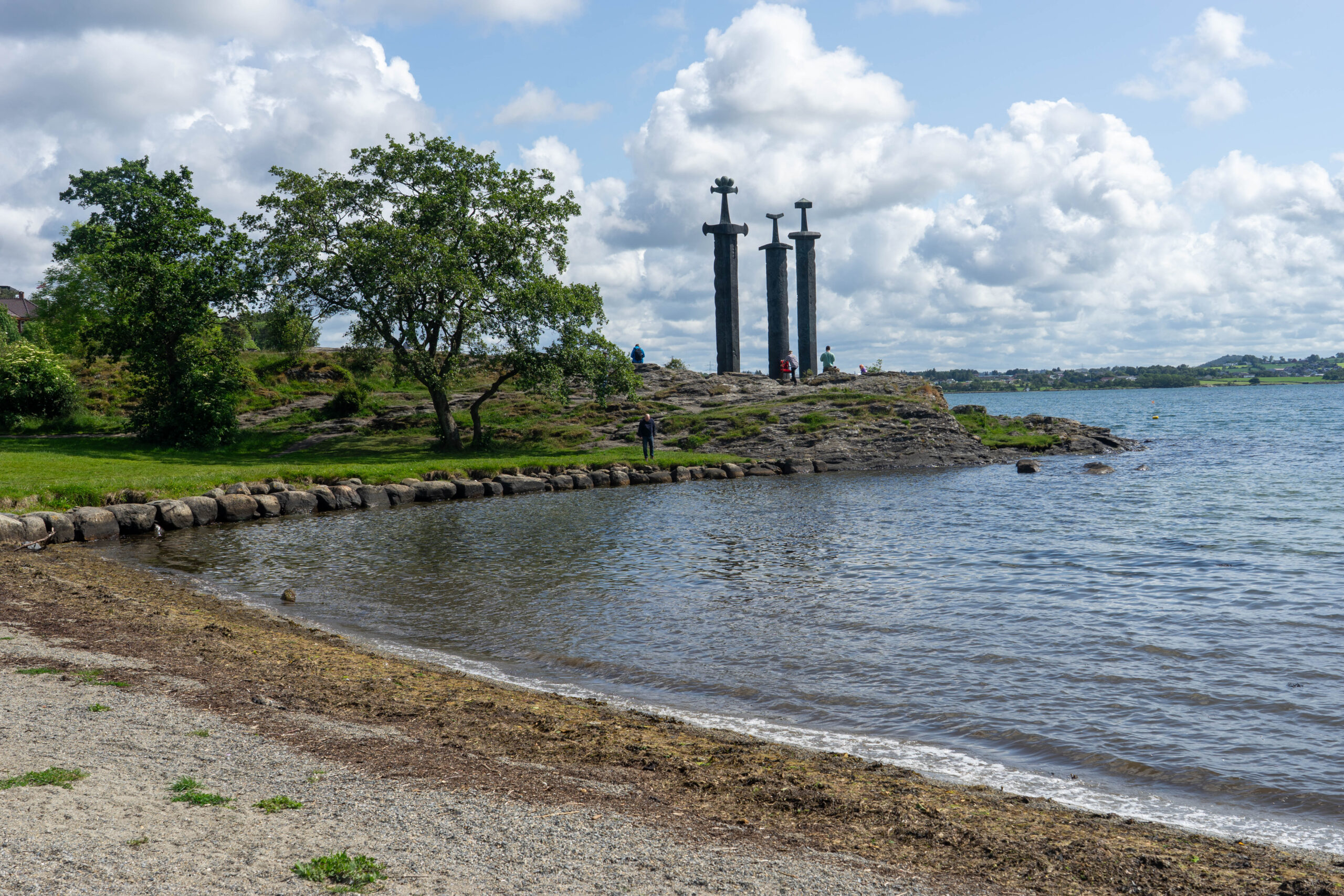
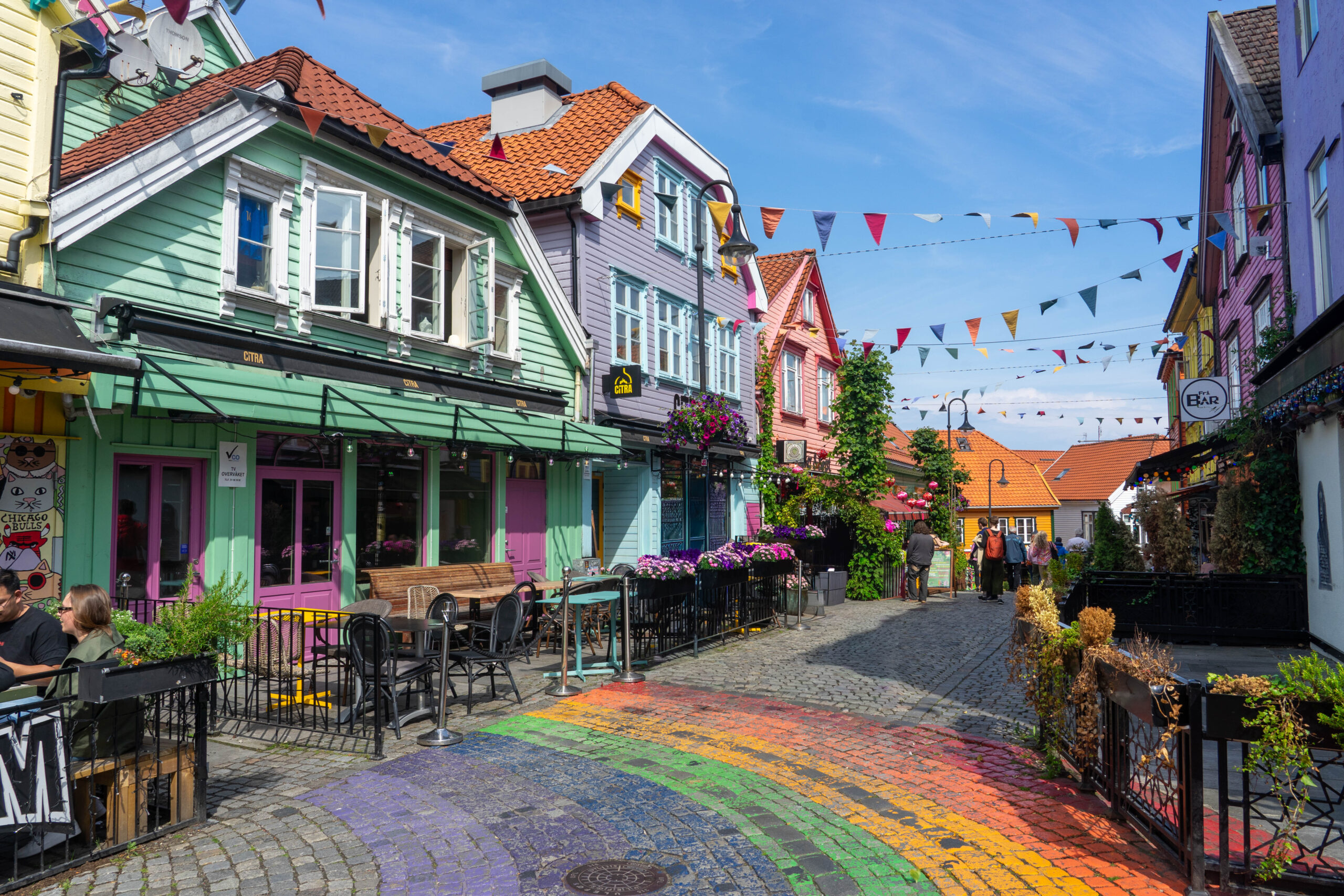
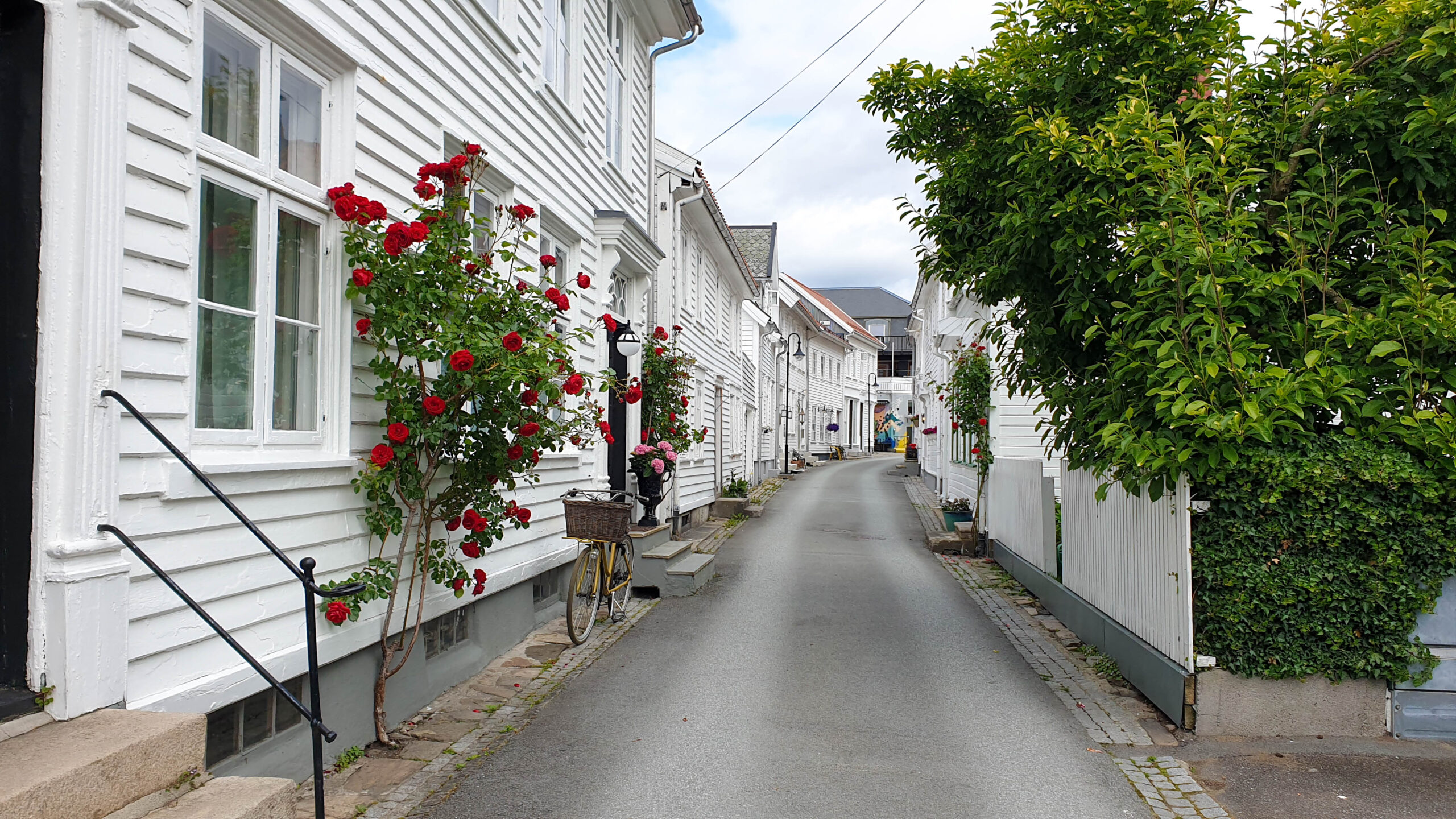
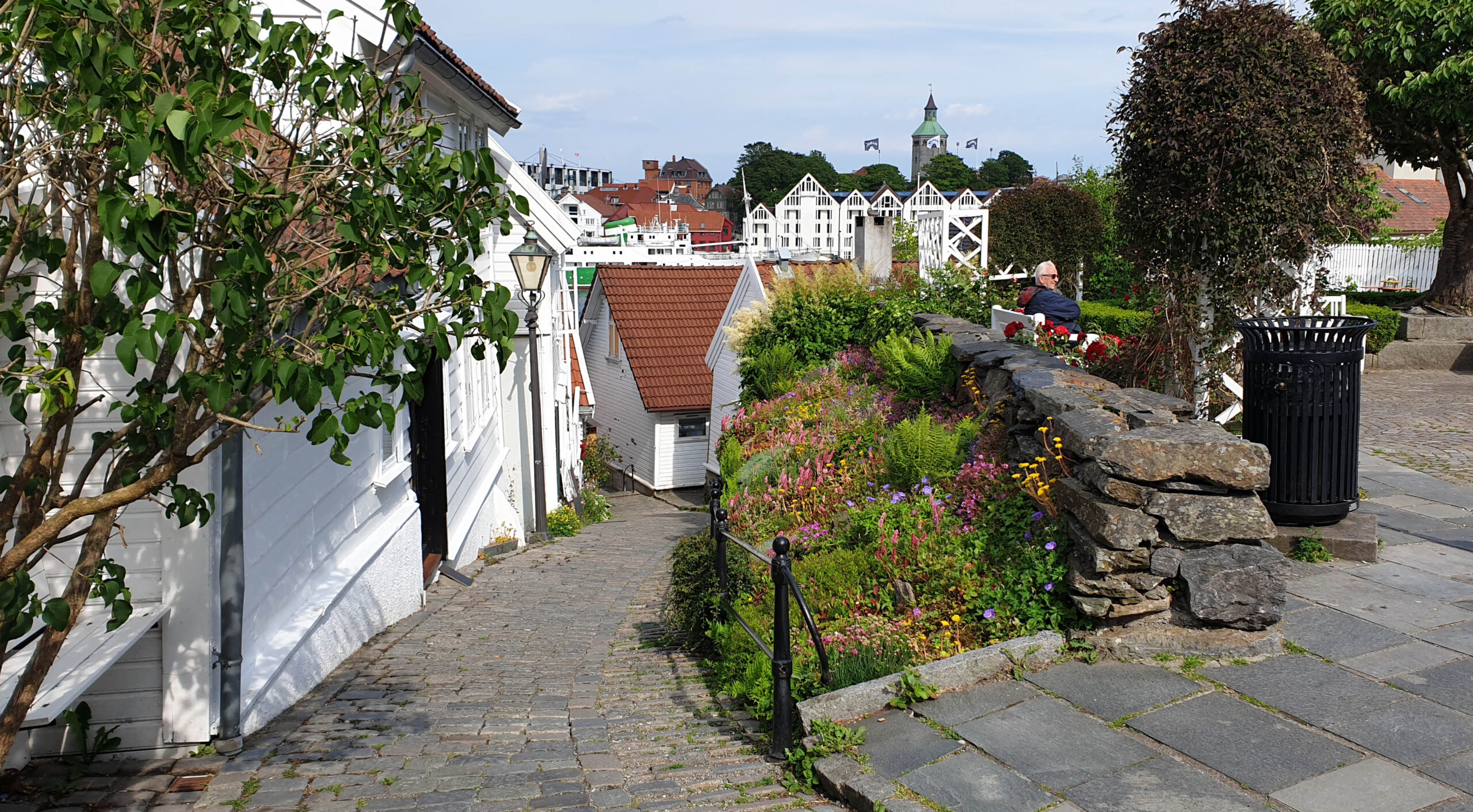
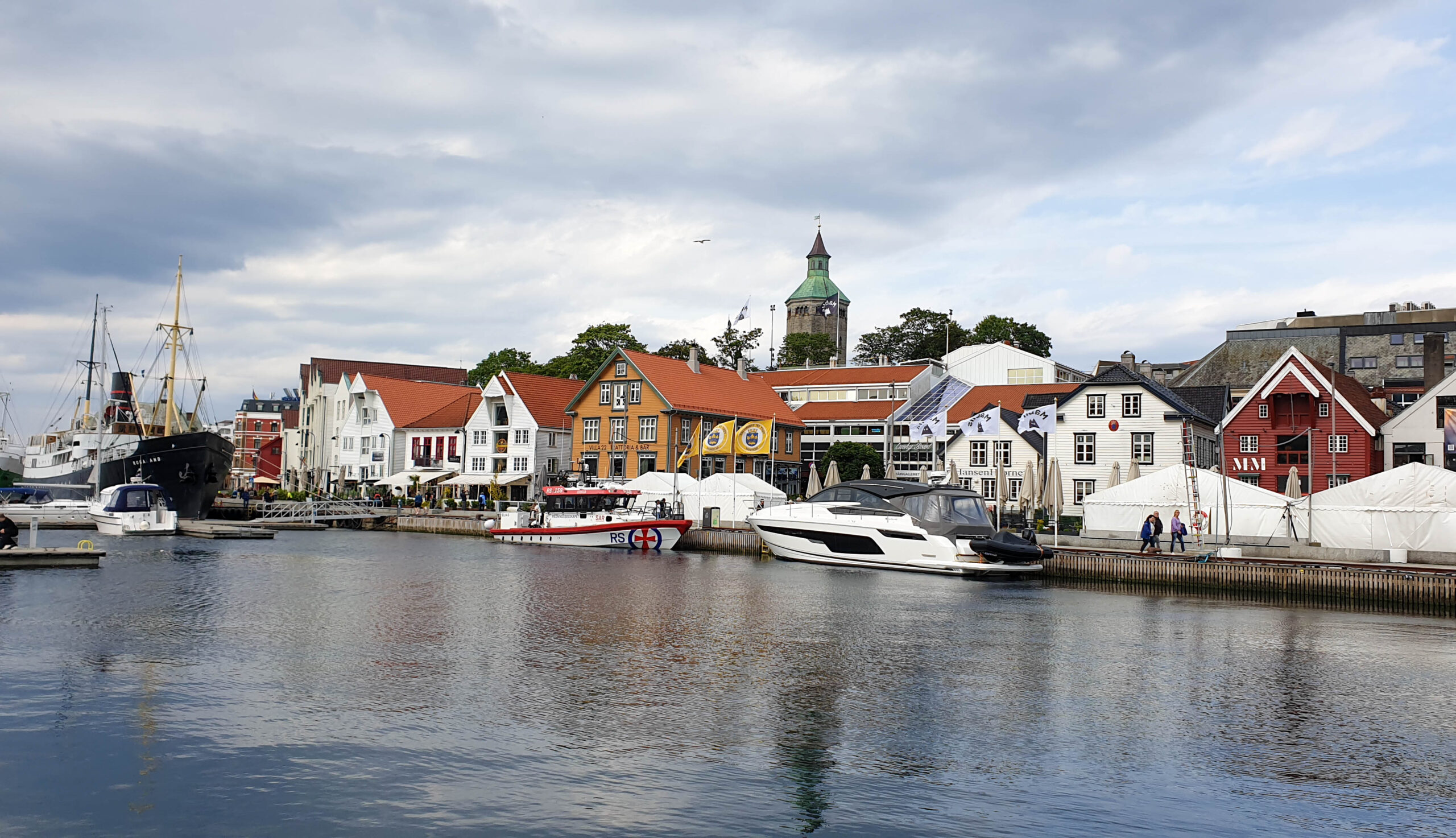
In Stavanger, our next stop, we were allocated a berth between the marina and the cruise ship quay, making MS Europa 2 and Amadea our immediate neighbours. Between rain showers there was fortunately time for an extended walk through the old town, along Fargegata, to the cathedral and around the harbour. We also managed a cycle tour, including a stop at the “Swords in Rock”.
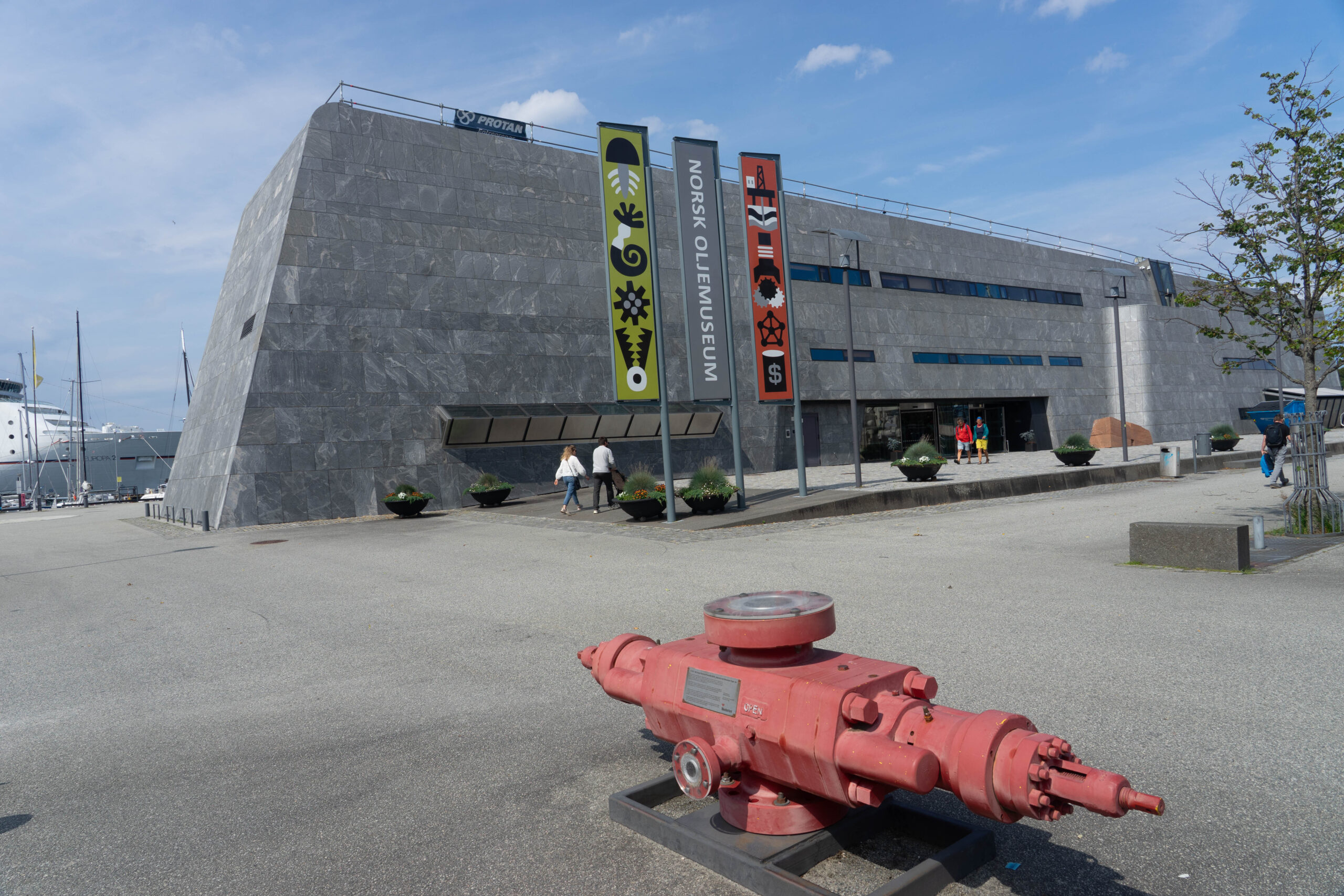
On the day of our onward passage we visited the Norwegian Petroleum Museum in the morning, gaining plenty of insight into Norway’s modern wealth and the technologies behind it.
Leave a reply